Subscribe to this RSS feed
Tuesday, 25 August 2020 09:47

Indian Web Series

Between the soppy soap operas on TV and the fluffy Bollywood flicks, Indian Web Series are enjoying a moment under the sun. For people looking for something beyond the cliché of 50 something middle aged actors running around the trees, the digital space has a plethora of exciting web series to watch out for.
Increased internet accessibility, cheaper mobile phones and ditching the run-of-the-mill stories in favor of out-of-the-box, realistic content has set the Indian Web Series space buzzing.

Shackle free space
Mainstream films in India have traditionally settled for ‘sanitized’, quotidian themes and stock characters’ least they invite the wrath of the draconian censor board or hurt the often volatile public sentiments. Sanjay Leela Bhansali’s magnum opus Padmavati and Anurag Kashyap’s Udta Punjab were in the eye of the storm recently. Indian Web Series, still outside the preview of the censor board allows us to traverse over progressive territories viz-a-viz content. Though, in the swiftly shrinking space for tolerance, one can never be sure which story might brew a fresh storm and put the noose on web content.

../Desktop/indian-web-series.jpg

Content rules
The short episodic structure of the web series reflecting the humdrum of urban existence has found resonance with the attention deficit, on-the-go generation. The runaway success of shows like ‘Permanent Roomamates’ and ‘The Aam Aadmi Family’ and many such series speak for the phenomenon of Indian web shows. Web series are pushing the envelop by delving into complex themes as varied as gay rights, premarital cohabitation and a modernistic take on marriage and sexuality.

Indian web series to watch out for in 2018
With big studio backings and mega stars associating themselves with the web series, 2018 could catapult the Indian web space into a league of its own. ‘The Ministry’, a political satire featuring Irfan Khan, ‘Breath’ starring R. Madhavan and ‘Sacred Games’ based on the novel by Vikram Chandra to be directed by Anurag Kashyap and Vikramaditya Motwani are some of the web series to watch out for in 2018.

Authored by Prof. Rahul Mate. MSc Mass Communication and MA English Literature Dept. of Assistant Professor, Journalism and Mass Communication, Vishwakarma University, Pune

Tuesday, 25 August 2020 09:43

Management Education and Entrepreneurship: A positive relationship

Linkedlin Post For Management Education Entrepreneurship 1

Management education acts as a fertile ground to develop entrepreneurial skills, independent thinking, ability to spot the opportunities, risk taking ability etc. For students driven to be entrepreneurs, a good blend of theoretical grounding and practical exposure and interaction with entrepreneurs could be a boon. To instill confidence in their ideas classroom education and attitudinal training in entrepreneurship should go hand in hand.

To do so, the students would extensively need to be exposed to real life situations by giving them an opportunity to participate in business plan competitions on a regular basis, handling live industry projects often. Successful entrepreneurs can also be roped in, to share their experiences with the students about the challenges faced by them, opportunities in the market, knowledge about financial assistance. More and more interaction with entrepreneurs through guest lectures and seminars/conferences and close association with senior managers in high growth, innovative companies would go a long way in enlightening the future entrepreneurs. Being associated with entrepreneurs would allow students strategic inputs to start their independent ventures.

Since the job market is likely to reach saturation, the inventory of available jobs may be exhausted soon. Creating entrepreneurs would go a long way towards the development of the economy as well as job creation. The education sector, by encouraging entrepreneurial spirit could itself become an established growth industry. It could provide a hunting ground to discover the hidden entrepreneurs from amongst the otherwise academically talented crop of students. 

Management education remains a crucial opportunity for aspiring entrepreneurs for the following reasons:

1. Providing access to versatile relationships
Many universities and educational institutions are contributing to their local startup ecosystem through incubator and accelerator programs. These programs connect young entrepreneurs to real startup resources that are harder to come by when you are starting out on your own. In some cases it leads to job opportunities and access to funding for student-led projects.


2. Enhancing skills through student diversity
MBA and BBA programs offer the opportunity to both work with different personalities on projects and interact with students from different cultures. Learning how to manage groups of people who don’t always agree will be a key to creating a positive work environment in your company.

3. Inculcating leadership qualities and management skills
Half of all businesses fail by their fifth year, and only 80 percent make it past the first. The exposure to entrepreneurship and other management courses that teach skills like leading others in a business setting are vital for succeeding in the competitive environment.
Entrepreneurs are good at identifying ways to make the most of opportunities, so a good management education helps them tap those opportunities more effectively. With their concentration of resources and growing emphasis on providing entrepreneurial experiences, colleges, universities, and other educational programs are the right first step for budding entrepreneurs and leaders looking to make it big in the corporate world.

(The above article is a summary of two research articles and The Forbes Magazine)

References:
1. Waraich, S. B., & Sharma, R. MANAGEMENT EDUCATION AND ENTREPRENEURSHIP.
2. Gangaiah, B., & Viswanath, J. (2014). Impact of Indian management education in developing entrepreneurial aspirations and attitudes among management students. Asia Pacific Journal of Research, 1.
3. https://www.forbes.com/sites/williamarruda/2018/02/11/why-aspiring-entrepreneurs-should-put-their-education-first/#7d06c340467c

Authored by Dr. Jayashree Vispute Assistant Prof & HoD CM Department, Vishwakarma University, Pune

Tuesday, 25 August 2020 09:38

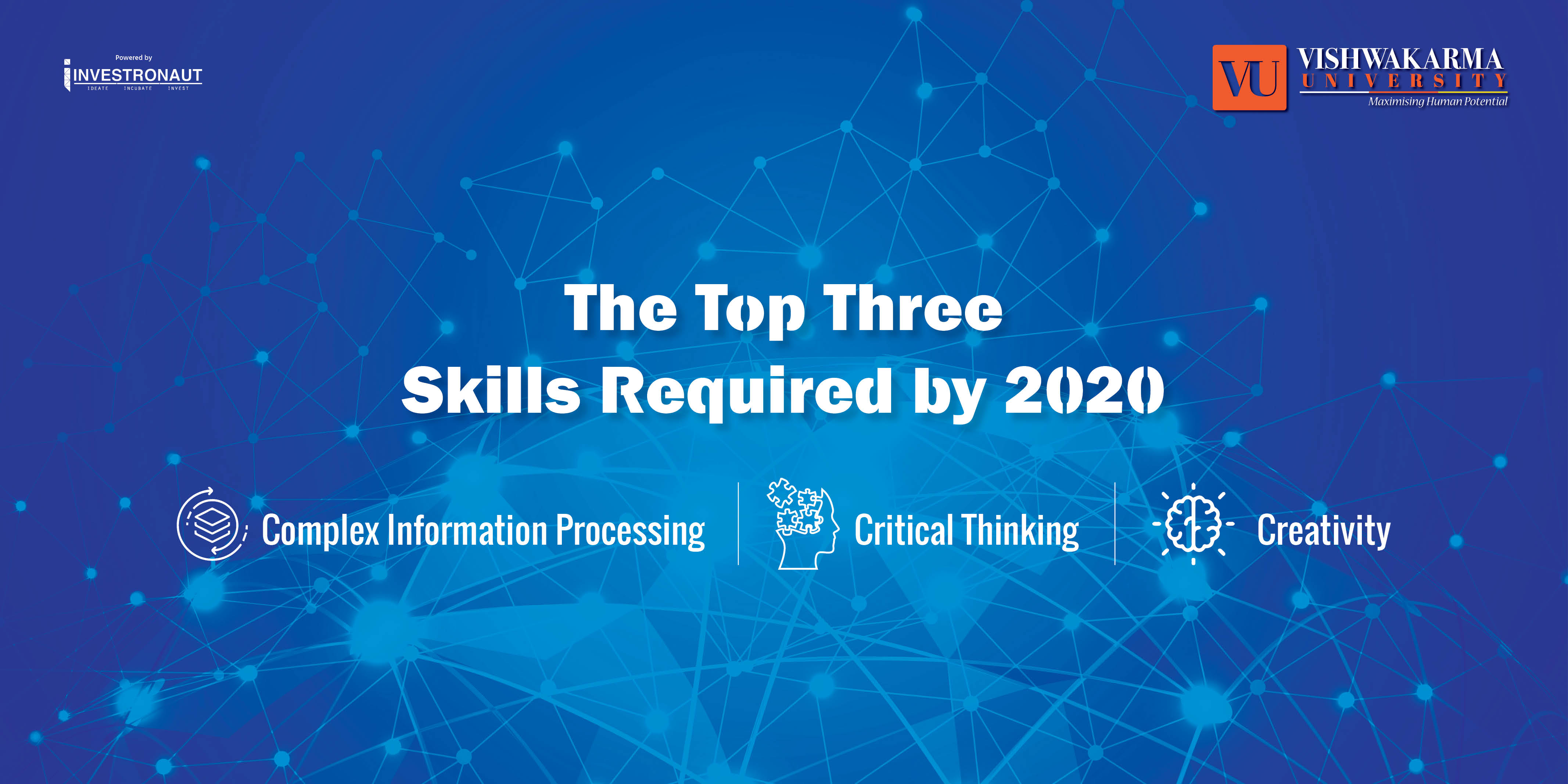
Essential skills for the future - Complex information processing, Critical thinking and Creativity

Linkedlin Post For The top three skills required by 2020

In the wake of digitalisation and democratization of information, the world is a transformed place. New technologies have led to the proliferation of handheld devices and computers that enable connectivity and allow access to information without traditional dependency on infrastructure of roads.

Diffusion of Technology

We are in the fourth industrial revolution and new technology has blurred the boundaries between physical, digital and biological spaces. Unbelievable as it may sound, it is now possible for machines to manufacture organs/ biological matter. Machines now possess the intelligence based on the digital capability and enormous cognitive ability.

The definition of automobiles has changed to mobility solutions reducing the moving components by more than 80% and the mobility has become a function of electronics and primarily data driven, outdating the classical mechanical engineering of internal combustion engines. The landscape of industry and business has undergone paradigm shift which is evident from the fact that Google is now on the verge of making cars, which in the conventional sense of business definition and domains is unheard of. A self-driven electric delivery van, that could be on UK streets next year, has been unveiled at the Wired 2016 conference in London. The firm manufacturing it claims that the vehicle's stripped-back design and lightweight materials mean it can be assembled by one person in four hours.
This digitally transformed world, is bound to have bearing on human resources development and skill up gradation programmes.

Preparing well-groomed human resource for present and future

The digital transformation, access to information and thereby commoditization of knowledge has posed new challenges for academia. As per the world economic forum publication, the top three skills required by 2020 are - complex information processing, critical thinking and creativity (the three Cs). Academic community and Universities will have to respond to these transitions without compromising the essential aspect of core teaching-learning and development of student ability in the new context.

It is important to inculcate the essential skill set or the three Cs as an integral part of the human resource grooming in view of these challenges. Universities are springs of knowledge, and an enriched source of well-groomed human resource. The onus lies with them to produce human resource, which can respond and adapt to the technological diffusions, contribute to society and industry and keep pace with the swift paradigm transition.

There is an emergence of learning, un-learning and re-learning cycle to adapt to the changes in the existing human resource in the industry. This necessitates another role of academia in terms of providing anyone, anytime and anywhere the skills for capacity development. The “ability to adapt” is imperative to develop the existing work force for the industry to embrace the changes.

The diffusion of digitalization in the world of machines, humans and for that matter every single aspect surrounding us has resulted in the generation of humongous data. This leads to the task of processing this data in the meaningful context. It has become a tool that transcends all the boundaries of specializations. There is a pressing need for inter-disciplinary skill sets and should be incorporated in the educational system. In the age of industry revolution, the future holds many challenges, let’s be prepared for them.

Authored by Dr. Sidharth Jabade Vice Chancellor, Vishwakarma University, Pune

Tuesday, 25 August 2020 09:34

Dilemma about future: A tale of a young girl

linkedin article

A third year Science student in college, Mansi usually beams with life, is always raring to learn new skills and challenge her own boundaries. But lately an existential dilemma seemed to have gripped her. She is often downcast and anxious.

Today, like any other day she helped her mom getting her younger brother off to school and rushed to college. As she hopped on to her scooty, she couldn't help thinking of the time when she vehemently resisted the pressure to apply for Engineering and Medical entrance exams after Clas XII. She had grown up in this city and the thought of relocating to a new city, leaving her friends and family unsettled her. So she stayed back, enrolling herself in a science course. Two years had passed in a wink! Mansi was now in her third year of college and clueless as to what she wanted to do with her future. She was never been a bookworm and had always believed in combining academics with extra curricular activities. In the last two years, along with her studies she had learned a foreign language, tried her hand at music, painting and dancing. But after all this she still feels lost. Had she gambled her career away because of her choices? Was she a jack of all trades and master of none? With her head clouded with self doubt she reached college.

The college was organizing a seminar on Interdisciplinary studies. She had little idea of what that meant. The resource person in the seminar dashed out mind boggling figures. He informed them that by 2022, 9% of Indians would be in jobs that did not even exist today. He said that 60%-65% of the Indian workforce in the IT-BPM would be deployed in jobs that have radically changed skill sets, followed by 55%-60% in BFSI and 50%-55% in the automotive sector. Exponential technologies in the advanced markets were expected to improve productivity by 15-20% in the next five years, he added. Increasing demand for business innovation, creation of highly optimized supply chains, the launch of smart connected products/services, new work arrangements, and the demand for a planet with sustainability would require human resource with interdisciplinary skills, aptitude and knowledge. Need for a constant search for faster, better, cheaper and user friendly solutions to satisfy the new age is on the rise, he concluded finally.

Overwhelmed by the complicated data and figures, all Mansi could comprehend was that interdisciplinary skills were going to shape the future of the job market. After the seminar, Mansi headed to Prof. Despande’s office to seek some clarity. Prof. Deshpande, was hugely popular amongst students for his academic brilliance and friendly disposition.

“Sir, I am so confused! I cant figure out what to do with my future after I pass out of college. Should I apply for a Master’s degree? Should I take up a job? But I don't know what is it that I want to do in the long run! I am interested in too many things!” Mansi blurted out without pausing to take a breath.

Prof. Despande was slightly taken aback by the volley of questions being thrown at him. But he smiled gently and asked Mansi to sit down. He explained “Mansi you have numerous skills. You are a good cook. You can paint and dance and play music. You can speak a foreign language and you have a degree in Science too! You can do whatever you like.”

The expression on Mansi’s face turned from curious to perplexed. ‘I don't think I understand you Sir,’ she said.

Prof. Despande explained further “The world is moving on from a narrow approach to problem solving to a more eclectic approach. You should focus on acquiring as many different skills as possible and train yourself to come up with creative solutions to problems. Interdisciplinary studies is the way ahead. The rationale for interdisciplinary studies lies in our observation that, in the world of matter and life, there is very thin separation of different disciplines of knowledge. The world has recognized that all the sciences need to be employed in understanding humans and their relationship with the environment. Therefore in this century, interdisciplinarity is increasingly becoming an important approach in our understanding of the natural and social worlds. And the persons having interdisciplinary knowledge, skills and aptitude are becoming key persons for jobs involving problem solving tasks.”

Professor Despande continued “The word ‘Educate’ in Latin means ‘to draw out’. Therefore etymologically, to educate means we draw out knowledge. So to teach interdisciplinarity means to expose the students to a situation in which interdisciplinarity is required. Provide them with some vital information. The students observes, listens, thinks and analyzes the situation, finds the best possible solution or opportunity to deal with the situation effectively. In this process the student learns and acquires knowledge. Once trained, the student is able to face a new situation and skillfully analyze it, and therefore, whatever skills are required for the new new jobs the student easily adapts to them.”

“Okay…I understand but how do I choose what to study” Manasi mumbled.

Well! the choice must be based on your inherent nature, the innate bent known as passion, the distinct passion which defines individuality. From an early age the passion manifests in a student as a clear tendency, a clear inclination towards say engineering, painting, music, medicine, history, philosophy, writing, speaking etc. This tendency arising out of passion is said to be one’s own nature. So draw out the skills in your own nature, and then build your career around it by enhancing your interdisciplinary skills.
“Sir can you please suggest any definite course for me that will derive me towards interdisciplinarity?” she asked eagerly.

“Sure! For a person like you, I would suggest you to opt for professional education in interdisciplinary studies which a lot of new age state private universities are offering these days. The Government of India has recently initiated a skill gap bridging programme under which they have identified the current and future (2012 to 2022) skills and manpower requirement by the industry and estimated the skill gap that exists today. They have identified that in sectors like organized retail, logistics and supply chain, business analytics, tourism and hospitality, banking finance and insurance, youth like you equipped with interdisciplinary skills would be required.”

“Great! Thank you very much, Sir”, Mansi chirped. Having cleared some of the cobwebs in her mind and new hopes springing in her heart she lightly bounced out of the office, visibly relieved.

Source used:
FICCI-NASSCOM & EY- Future of Jobs- report. Read more at: https://economictimes.indiatimes.com/articleshow/62052943.cms?utm_source=contentofinterest&utm_medium=text&utm_campaign=cppst

Authored by Prof. (Dr.) Sunil D. Doke. Dept. of Professional and Vocational Courses under Faculty of Interdisciplinary Studies, Vishwakarma University, Pune


Tuesday, 25 August 2020 09:31

Brand Mascots In Advertising

Brands invest considerable energy in choosing the right endorsement strategy keeping in mind the target audience. In the past, when celebrities endorsed fewer brands and an aura of mystery surrounded them in a less connected world, the relationship between the consumer, brand and celebrity was more intimate and attracted the right quotient of curiosity in the product.

In the post-internet world of ultra communication, advertising strategies are changing. A parallel advertising technique i.e. use of animated characters or brand mascots is increasingly becoming popular amongst the emoji using generation willing to experiment.

Linkedlin Post For Brand mascots in Advertising 1

Brand mascots Vs Celebrities

Are you able to associate Amitabh Bacchan or Kareena Kapoor to a particular brand the way you associate the blue haired girl in a polka dot frock with Amul butter? Or Louie, the despicable mosquito with Mortein? The answer is probably not in the affirmative. The brand campaigns designed around celebrities can no longer be completely relied on to bring credibility to the brands.

Brand mascots are visually distinct and often convey the brand message through an amusing story which enhances the recall of the product. In certain cases, these mascots become so popular that they escalate the brand name into day to day conversation. Remember how the balloon shaped ZooZoos muttering in a comic language became the talking point when first introduced by Vodafone during the Indian Premier League? Celebrities on the other hand simultaneously endorse multiple brands over the years so customer do not exclusively equate them with any particular brand.

Celebrities bring along their larger than life personas to a brand campaign. Their image often limits the scope of the campaign and overpowers the brand. Animated characters are often ordinary folks in ordinary situations which makes them, and by extension the product, relatable to the consumer. Didn’t we all empathize with the worry lines on Chintamani’s forehead from ICICI Prudential Life Insurance advertisement inundated by savings and tax worries?

Snapdeal is a good example of how celebrity endorsements can harm a brand. After Amir Khan found himself caught in the eye of the storm over a sensitive remark, absurd as it may sound, thousands of users either deleted the Snapdeal app or gave it a lower grade. Brand mascots are fictional and save the brand the hassle of bearing the brunt of their personal life adventures.

Today the consumers’ choice is guided by reviews and ratings rather than being charmed by a celebrity. The consumer is smart enough to realize that celebrities endorse a brand for money rather than any genuine interest in the brand.

Cost factor

Depending on the quality of production, detailing and use of 2D, 3D or clay animation, using a brand mascot for an advertisement costs less or as much as a basic live action advertisement minus the celebrities. Roping in celebrities come in with a hefty price and complicated contracts. Creating mascot characters could be a thrifty option with better brand identity.

In a glut of celebrity endorsements, brand mascots stand apart, that have a lasting appeal and successfully communicate the ethos of the brand. With the constantly evolving technology, and the many advantages mascot characters enjoy over celebrity endorsement, their use to build a brand identity is likely to grow in advertisements.

Authored by Mr. Mandar Naik, Lecturer at Art and Design faculty, Vishwakarma University


Tuesday, 25 August 2020 09:27

Psychometrics for a better career choice

Psychometrics for a Better Career Choice

Students of today dream of success in their careers and they definitely have the potential to craft their own success stories. But one common observation across the globe is the confusion in the chosen career. Students are not exactly sure what they want to do. They have some inclination but they are not very sure what they would like to do with

Psychometric testing can be used to make a better career choice. Psychometric testing can be used as a chisel to carve the statuette of a successful individual. Students have a billion options to choose from. And though it is helpful it definitely increases the confusion for most.

In India a lot of attributes affect students’ choice of a stream like family environment, gender, relatives’ opinions, family history, etc. But are these the right attributes? That is why you would notice a lot of individuals facing issues of job dissatisfaction, regardless of the income.

So what is actually needed while choosing a career? A student’s aptitude, interest, personality, adjustment capabilities!!!

How can we identify these without greater error? Psychometric testing is the answer. Emerging as a new trend across the globe over the past decade, psychometric testing has been praised for its ability to help students navigate pathways out of school and into a career. Developed in the early 20th century, psychometrics are applied measurements of the mind that offer comprehensive and reliable insights into personal strengths and weaknesses.

We all make assumptions about our abilities. Psychometric testing can throw up unexpected results and pave the way for better career possibilities. A battery of tests is composed to encompass all these needs. The results are based on the students’ answers but there is a cheat-catch in almost each question that sifts out the human tendency to by-pass the truth. Hence they are authentic and reliable, most often. Psychometric tests are impersonal, standardized and objective so there is no question of bias. In fact the recommendations are based on actuals.

Many graduate recruiters use psychometric tests as part of the selection process for their graduate schemes because of all the above mentioned advantages. A lot of companies’ recruitment procedures have psychometric testing or aptitude testing.

Psychometric testing has now become the need of the hour for students across the globe to guide them across a right career path.

Authored by Asst. Prof. Jiyaa Khatri, Dept. of Psychology, Vishwakarma University, Pune

Tuesday, 25 August 2020 09:23

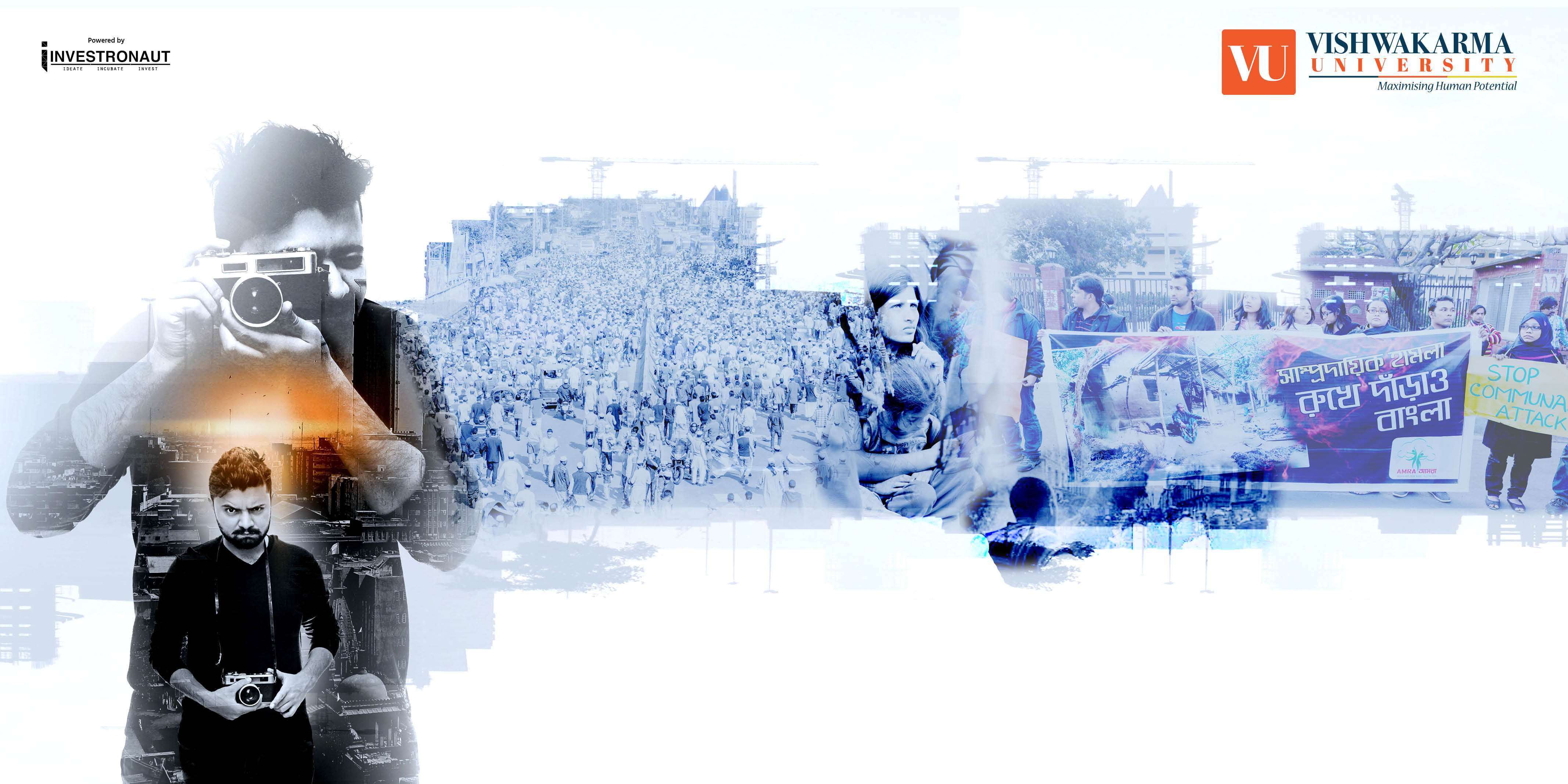
Dilemmas and Ethics in Photojournalism

Artical Photojournalism

For many of us the massive civil unrest of 2016 in Kashmir was the first of its kind that shook us out of our urban complacency, made us pause and take notice. Soul slashing pictures of hundreds of youth blinded by pellets moved us emotionally irrespective of which side of the opinion one subscribed to. In another instance, last year, pictures of dust smeared Omran Daqneesh, a Syrian boy sitting still and stunned after an air strike became a stark reminder of the horrors of the war. Did you ever think that there was always an invisible person braving through chaos and violence, trying to capture these compelling but risky shots? He is a photojournalist.

To capture or not to capture.

Often photographers find themselves trapped between a rock and a hard place especially while covering the conflict ridden regions. In 1993 Kevin Carter clicked the picture of a malnourished girl in Sudan being observed by a vulture in the background, a symbol of death in most cultures. The picture sparked a debate and people still continue to question the morality of the photographer. How could he busy himself taking a picture instead of offering help?- was the usual rhetoric. The same argument is used for most pictures where the subject is portrayed in crisis.
Kevin Carter committed suicide three months after clicking the picture. The jury is divided whether his guilt for not being able to offer help or his own impoverished circumstances in life that made him take the drastic step. His suicide note read that he was depressed, had no money for phone bills, rent, child care and that he was haunted by the memory of wounded children.

So what is the solution to this dilemma? Should photojournalists hang up their boots and stop doing what they do? Should we all assume that the world is a la la land? Looking away from difficult pictures will not change the reality. We need to realize that photojournalists are not responsible for the sufferings of the world. And in most cases photographers are not in a position to offer any help. The least they can do is to take pictures and carry the message to a larger world that can pressurize the people in positions of power to do something about it.

A good photograph captures real moments and raw emotions which can evoke strong feelings of joy, sadness, loss, shock or empathy without using words. It makes people look and look a little longer! It can translate into reflection and a single picture can sometimes become a movement for help. Steve McCurry’s famous portrayed picture “The Afghan Girl” with her piercing green eyes made the world take notice of the refugee crisis in Afghanistan. It is to his credit that the Afghan Children’s fund was founded j
and more than 1 million dollars were raised. His work, along with many other noted photojournalists has shown hope and light in the dark tunnel.

We should not forget that these photographers often operate from some of the most hostile and dangerous quarters of the world. Sometimes they click pictures at the cost of their emotional and physical health. A lot of journalists suffer from depression and Post Traumatic Stress Disorder (PTSD) after spending considerable time in conflict and famine ridden regions.

Photojournalists often have to navigate a tightrope walk between capturing a compelling image and being sensitive to the vulnerable subjects.
Crucifying the photographer will change nothing. A picture that makes us challenge our comfort zone is an opportunity for us to introspect and reflect on our privileges or do something to make this world a better place. Photographers are merely messengers, shooting the messenger will mute the important message from spreading.

Doctored images.
With new technologies the integrity of photojournalists and the organizations they work for, is being questioned. Some photojournalists have been caught indulging in the malpractice. Often photoshopped and digitally tampered pictures appear on the covers of magazine and other digital media portals.

Even famous and prestigious TIME magazines couldn't resist the lure to tamper with the original pictures. In 1994, TIME magazines came under severe criticism for manipulating the picture of OJ Simpson, arrested for murder by making him look darker and devilish. TIME later apologized to it’s readers.

Accuracy is the benchmark of journalism. Pictures, like written records are a historical document for posterity to make sense of the past. Putting out deceptive pictures in the public domain is a breach of the ethical code and should be curbed by all means.

Photojournalism and the power of a good image.
Ever since the invention of the camera in 1839, photography has kept company with death and suffering. Spanish Civil war was the first war to be witnessed or covered in the modern sense by photojournalists. It brought the conflict to the intimate proximity of peoples homes. But photojournalism goes just beyond war and death.

A photograph is a curious object. On the one hand it is a symbol of human vulnerability and fragility as the moment captured is irreversibly and irremediably lost. On the other hand, it counters that fragility since the captured moment is forever rescued from loss and oblivion since it is frozen in time. The photograph , therefore, is an effective witness of a narrative, and the photographer the creator of this narrative. The narrative captured will reflect the photographer’s perception of the moment.

The age old cliche “a picture is worth a thousand words” forms the backbone of photojournalism. Just like journalists use their pen and paper to tell a story, photojournalists convey a visual story using their camera. We are all visual beings and more than half of our brain’s computational power is connected to sight. Our eyes are the doors to the world and it’s through them that we make any sense of the world. Photojournalism thrives on this quality.

References- https://artplusmarketing.com/the-ethics-of-photojournalism-e2e2a7abf621

Authored by Richa Singh, Content Writer, Investronaut

Tuesday, 25 August 2020 09:17

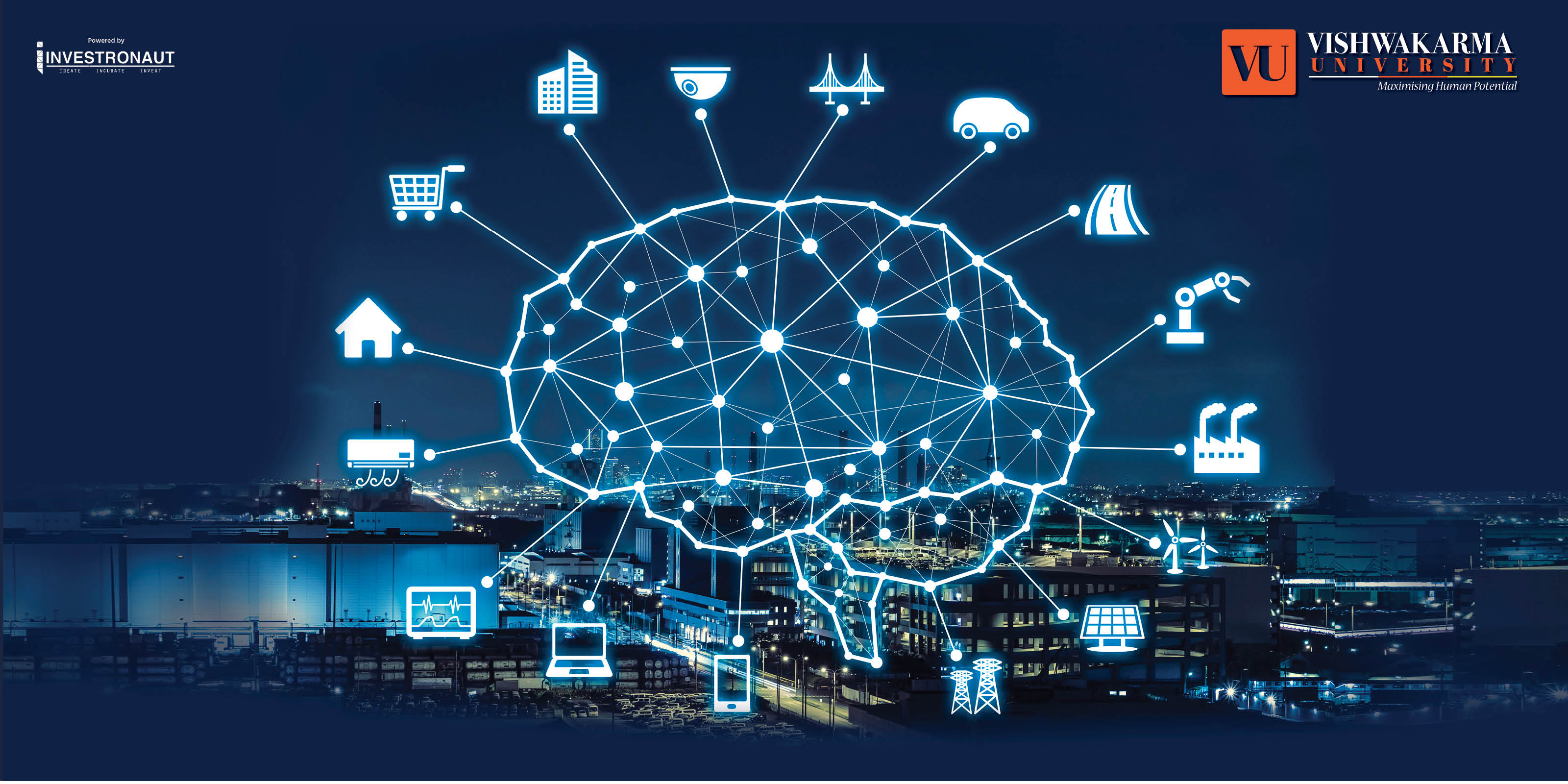
Artificial Intelligence- Gateway to a promising career

Linkedlin Post For Artificial Intelligence 3

Artificial Intelligence (AI) is said to be more revolutionary as an invention over discovery of electricity and the invention of the Internet. The buzz is that the manifestation of this technology is going to transform our lives in more ways than one. As artificial intelligence is making inroads into various domains of human life there is a lot of speculation about the future of humans on earth, the nature of new jobs and the imminent loss of existing jobs.

The application of artificial intelligence from health care to education, banking to transport, retail to entertainment is advancing at a fast pace. Hence, it is extremely important for students and adults to acquire skills in artificial intelligence. Training in this multidisciplinary field guarantees tremendous career opportunities. The onus of training the human resources in AI and laying out clear guidelines to tackle the downside of this technology is humungous. The universities are gradually rising up to the challenge and stitching together courses, though a lot needs to be done yet.

Artificial Intelligence is an inherently multidisciplinary field, it spans the intersection of skills in Science, Mathematics, Neuro - biology and Arts- Psychology, Philosophy, Sociology and Computers. For this reason, a lot of universities are allowing a more eclectic choice of courses leading up to a degree and offering specially designed courses in interdisciplinary studies.

Following branches of AI are making rapid inroads in the domains that directly impact our lives -

Expert Systems: It is a computer application that performs a task within a specialized domain with human expertise. The applicability of expert systems in the medical field is unlimited. One such area is medical diagnostics to predict the likelihood of a medical condition, to monitor the course of a disease, to analyze a patient’s response to treatments and to guide the selection of further tests and treatments. Expert system solutions are also successfully deployed to solve issues in the fields of architecture, archeology, commerce, trade and education.

Natural Language Processing(NLP): NLP, coupled with speech recognition, helps machines understand and interact in a natural language spoken by humans. NLP tasks include automatic text summarization, sentiment analysis, text classification and answering questions. Commercial systems like Siri, OK Google, Google Now, chat boxes, virtual assistants and spam filtering in email are few of the NLP applications.

Artificial Neural Networks (ANN): Inspired by biological neural networks, ANN is an attempt to create a network of artificial neurons working in parallel to mimic certain cognitive powers of humans. Classical AI techniques are very good at puzzle and problem solving, playing games like grandmaster-level chess, Othello and complex mathematical computations. But they perform poorly at mimicking human perception like recognizing an object, hearing etc. This is where the strength of ANN lies. An artificial neural net is designed for a specific application like pattern recognition. They are successfully deployed in industry, commerce, and finance applications.

Deep learning models based on ANN have led to cutting edge innovations in computer vision, speech recognition, robotics -  popular application being self-driving vehicles. Deep learning engineers are highly sought after in industry.

Robotics : It is an interdisciplinary branch of engineering that deals with designing, building and programming robots. Until recently robots were programmed to only carry out repetitive tasks that do not require intelligence, tasks to reduce and support human actions. Nowadays, advances in robotics rely on AI algorithms to train a robot to interact with people and the world around it in intelligent ways. The use of medical robots to assist human surgeons is becoming more widespread.

Gaming : This is one industry that has explored the potential of AI to the maximum. AI has become an integral part of every computer game. AI, in combination with augmented reality and 3D has changed the face of the computer games completely. In the near future, games will be able to detect facial expressions and the behavior of the player and adapt accordingly. AI is also playing a major role in online casinos and games.

An all pervasive fear in the discussions about AI is about the possibility of machines taking over the human race and the evident loss of jobs. However Andrew Ng, a leading thinker in AI and an adjunct Professor at Stanford University believes that certain domains are more likely to be affected than the others. The call centre employees, human drivers and radiologists are most likely to be most affected. He insists that the only way to remain relevant in the job market is to embrace a life long learning and constantly upgrade skills to keep pace with the changing job profiles.

According to Andrew Ng, Artificial Intelligence is bound to affect every segment of the economy in the future. Countries that invest their resources to have a definitive framework of policies for AI and beef up plans to upgrade skills of its human resources in Artificial Intelligence are likely to reap heavy premium.

It’s essential that governments world over promote digital education, take necessary steps to encourage research in AI and train its work force to keep pace with the quickly shifting paradigm of technology.

Authored by Ms. Reshma Pise, Assistant Professor, Department of Computer Engineering, Vishwakarma University.

Tuesday, 25 August 2020 09:12

Genre fiction, So! what’s wrong with it?

Genre fiction Creative

Last year as the news of Chetan Bhagat’s first novel “Five Point Someone” to be included in Delhi University’s syllabus broke out, social media was flooded with reactions that ranged from pearl clutching to downright ridicule. It’s not the first time genre fiction has been rebuked by dogmatic literary pandits. But despite being sneered at by critics, labelled as ‘low-brow’ by snobbish literary camps, the continued ascent of popular fiction across the world is a reaction to elitist view towards literature.

Genre fiction Vs Literary fiction

Termed ideal for a holiday read, Genre fiction is commercial in nature with the primary aim to entertain readers. So, it has a clearly defined plot, and explores realistic themes in a personal style of writing. It relies on telling than on showing. It may not always be experimental in terms of themes, language etc. However, there is a certain stigma and embarrassment attached to it by serious patrons of literature. It is often considered to be a juvenile and underdeveloped form.

Literary fiction is character driven i.e. thoughts and motivations of the character takes a centre stage while the plot is minimal. It is more experimental in terms of language, the use of narrative techniques and it does not relies on convention. It gives license to the reader to imagine a scene by minimal telling and more by the way of showing.

However these distinctions have time and again proved to be problematic, counterproductive and open ended. Daphne Du Maurier , writer of a masterpiece like Rebecca ; who was typecast as romance novelist in her life time is now a celebrated as a writer of layered complex narratives.

What if I were to read Charlotte Bronte’s Jane Eyre primarily as a romance novel, focusing on the ending when Rochester and Jane are reunited? Does the book gets demoted as Genre fiction? If not, then do we not need to dismantle such a distinction? Is the distinction between Genre and Literary fiction then still relevant? And who are the naysayers?

How did we reach here?

When Daniel Defoe’s Robinson Crusoe was published in 1719, it was viewed with suspicion and thought to be Genre fiction. It took more than a century for the novel to become literary and earn respectability. But it was not until the Modernist critique of the mass view of life expressed in the novels that the distinction of literary and genre hardened. Modernist writers in English like Virginia Woolf, James Joyce and Marcel Proust started experimenting with the stream of consciousness technique where the character’s thoughts and inner life was deeply explored. The trend hardened into a norm and anyone who did not adhere to it was labelled subservient and un-literary.
Even the post modernist movement which fractured the distinction between high and low art could not save the novel from this categorization.

The final nail in the coffin, which made genre an adjective was a clever marketing ploy by publishers. In order to market their books to a niche audience, they obsessively began to pigeonhole certain kinds of books in the category of literary fiction and declared them as pure literature. By extension that meant that only those kinds of books are artistic, important and better than other writing.

Why is it unseemly to look down upon genre fiction?

There can be as many literary tastes as there are people on this earth. Literature may serve different functions for each one of us at different times. To some exploratory narrative techniques, and fine language may be the lure to read a book. Some others may want to escape into a good story and an engaging plot, or yearn for an emotional catharsis in relatable themes. So what’s wrong with that? Why judge? Why arrogantly brush aside that need? Why not just let a book be a book?

Secondly, literature is not an elitist entity to be savored by the chosen few.
Often people who mock others for having tawdry taste are secretly members of the page 15 club. It’s good to be humble and acknowledge that fine writers as they all are, a Rushdie or Margaret Atwood or a Thomas Pynchon is not everyone’s cup of tea. So then what do we do? Wait or pick up that much needed first book that appeals to us?

I am by no means proposing that going by this logic one should not strive to create better literature or distinguish good from the bad. All I am saying is that we should not allow literary genres and certain literary style to govern our sense of judgement.

Literature plays a wider role in the society. To my mind it is a means to cultivate empathy, transform us and set our imagination on fire and yes to entertain us too! To this end if I choose to read a romance or fantasy or historical fiction it is entirely my prerogative. The theme of the novel can not be a yardstick to judge the quality of a book. So the next time you see someone holding a copy of Ravinder Singh, Jeffry Archer or Chetan Bhagat, think again before you pontificate.

References-

https://www.newyorker.com/books/joshua-rothman/better-way-think-genre-debate

Authored by Richa Singh, Content Writer, Investronaut

Tuesday, 25 August 2020 09:04

Understanding Green Finance

Understanding Green Finance

An uninhibited expansion of human activities and unrestricted development has wreaked havoc on the environment. The recent climate imbalance the world over and alarming levels of pollution is a warning about the bleak future that awaits us. In such a scenario, in order to mitigate the harmful effects of unsustainable development on the environment and to create eco-friendly models of development, green finance is the need of the hour.
Green finance refers to financial investment in environmentally responsible businesses, projects and industries. Green finance seeks to preserve the ecological integrity by encouraging green technology, boosting efficiency, sustainability and curtailing carbon footprints.

The World Bank and the European Investment Bank launched green bonds in 2007. Subsequently, corporate too started participating in 2013 giving a major boost to green finance. Green Bonds and Blue Bonds are a novel financial initiatives to raise climate finance. They are like regular bonds, the only difference being that the money raised is used for financing eco-friendly projects and protecting marine resources. These environment friendly projects could be in the areas of renewable energy, clean transportation and sustainable water management.

The Paris climate accord in 2015, has placed the dangers of climate change at the centerstage. It has become a contentious issue between the developed and developing nations. The first world camp is eager to make the emerging economies to commit to sustainable development. Developing nations are demanding the developed countries to provide funds to middle income and low income nations to mitigate the ill effects of climate change. The rationale behind this demand is that hitherto developed nations have been the largest contributors of carbon gas emission which has done considerable damage to the environment in form of warmer climates, increased sea levels, irregular rainfalls to name a few. Developing countries have inherited these issues from the developed countries and to absolve themselves of their sin they should help developing countries set up green projects. In the Paris agreement the feud was addressed to an extent when developed countries agreed to pay US $ 100 billion in aid till 2025 to developing countries for actions on climate change adaptation and mitigation.
Ironically, the U.S, amongst the biggest carbon emitters of the world has declared it’s withdrawal from the Paris agreement as soon as it is legally eligible to do so in 2020.

World scenario
In 2016, G20 heads of state recognized the need for green finance for the first time. It led to a series of strategy implementations for greening their financial systems with China being at the frontline, launching a 35-point programme. Leading insurance regulators all over the world have decided to collaborate to respond to sustainability challenges. Policy measures for greening the financial system has more than doubled to over 200 across 60 countries. These policy changes have accelerated green finance in the market.

Indian Scenario
Green finance space has seen a significant development in India.
India has undertaken national target of reducing emission intensity of GDP by 33-35 percent by 2030 under the Nationally Determined Contribution (NDC) goals. The Government has made an ambitious announcement to make India the first country in the world to use only electric vehicles by 2030. India plans to reduce its reliance on fossil fuels and increasing the share of renewables in its energy mix to 40 percent by 2030.
According to Namita Vikas, Group President & Global Head, Climate Strategy & Responsible Banking, Yes Bank, “India’s ambitious NDCs and Sustainable Development Goals (SDGs) are estimated to cost USD 2.5 trillion and $8.9 trillion, respectively, by 2030. Mobilizing this enormous amount of climate and SDG finance would require the development of new and innovative financial mechanisms, and channelization of funds towards sustainable sectors and businesses that not only deliver on climate targets, but also meet the developmental agenda.”
In India banks such as SIDBI, IDBI, YES Bank and others have associated themselves with several initiatives to promote lending for sustainable growth technologies particularly in MSME (Ministry of Micro, Small and Medium Enterprises) sector. Banks have created exclusive groups to work on climate change and more specifically on carbon credits advisory services. This group has devised a structured product for providing upfront finance against the carbon credit receivables.
There are several ways in which these banks and DFIs (Designated Financial Institutions) can contribute to green growth. Firstly, they can revamp their internal systems to move towards energy efficiency and move to e-transactions and e-statements, converting their buildings into green premises. Secondly, they can assess environment, social and governance (ESG) risks while appraising projects for financing, and thirdly, they can introduce green financial products such as green bonds.
India’s green bond market is currently pegged at about $3 billion, with the majority of it being allocated to renewable energy projects – contributing directly towards achieving India’s NDCs. Green municipal bonds hold promise towards building the 100 smart cities plan, through market interventions to revive the dormant municipal bonds market.
Yes Bank has raised over Rs 1,000 crore by floating green infra bonds and Exim Bank has obtained $500 million through the issue of green dollar bonds, while IDBI is also set to attract global investors in this arena. The Reserve Bank of India has included renewable energy project financing as a part of priority sector lending category in July 2015.

Conclusion
For developing economies like India the challenge is to get green finance into mainstream finance along with incorporating environmental impact into commercial lending decisions. This has to be done while maintaining a balance between economic growth and social development.
Mobilization of huge financial resources towards climate sustainable future is only one part of the challenge. Channelization of these funds to the emerging climate positive sectors and deployment of funds on time is crucial. A collaborative effort is needed to unleash the full potential of the new economy leading to a more sustainable and green development.

References:

Authored by CS. Sandhya Nair, Asst. Prof. Finance, Vishwakarma University

Page 79 of 101

Copyright © Vishwakarma University, Pune 2026 All rights reserved..
[Best viewed in IE 10+, Firefox, Chrome, Safari, Opera.]

Powered by  eduplus-logo

Programme Brochures
Apply for Admission
Register for VUNET
Register for VUPET
Ph.D Enquiry