Selecting the right university is one of the most critical decisions in a student’s life. The choice of institution can significantly impact your academic growth, career opportunities, and personal development. Whether you're wondering how to choose a university, how to choose a college or university, or how to choose a good university for your undergraduate or master's degree, this guide provides you with essential tips and factors to consider.

Ruth Bader Ginsburg's recent demise was mourned the world over. Nicknamed as "The Notorious RBG", the lawyer was celebrated as a pop culture icon for her formidable stand on feminism. At different points, great lawyers have left an indelible mark on the course of history. Mahatma Gandhi, Barack Obama, Nelson Mandela, Soli Sorabjee, Ram Jethmalani, Harish Salve... the list is endless.
How is it that lawyers have the potential to become rockstars that make a difference? What is it about law studies that makes it so appealing as a career?
Apart from appearing extremely cool in the black and white robes, being able to recite legal jargon as if the law were your second language and having the ability to shout out dramatically "I Object!" in an open court, here's a list of 10 reasons why choosing law as a career could be one of your best decisions!
1. Wide variety of fields within the law: Within the umbrella of law itself, there is a wide range of options you can pick from depending on your aptitude and interest. You can choose to work as a public prosecutor, solicitor general or you can work with private law firms. Some interesting options are energy law, criminal law, family law, international law, corporate/business law, bankruptcy law, immigration law, domestic law, etc. You can choose to work as a tax attorney, a real estate lawyer, a judge, or you can work in the medico-legal field... the options are numerous.
2. Financial stability: A good private lawyer is in high demand and clients are willing to pay any amount to have their representation. Various firms offer attractive financial packages and benefits to their lawyers and counsellors. This is, of course, one of the top reasons why students opt for the law.
3. Respect and Power: A lawyer enjoys a powerful and respectful position in society. No one wants to mess with a person who knows the laws inside out!
4. Job Satisfaction: Just like a good doctor can take away the client's pain and feel an instant gratification at having touched someone's life and benefitted someone, lawyers have a similar level of job satisfaction. When you work with your client, build a relationship with them and are able to resave their legal problems, it is truly rewarding. This feeling of service can be achieved in few other professions.
5. Intellectually challenging: New cases bring new challenges. Every new challenge requires a different approach and it keeps you on your feet. You also need to keep updating yourself with the latest reforms and stay abreast of the continuously changing laws. It can help develop your communication skills, argumentative skills, analytical reasoning and debate prowess. If you're someone who likes to stay sharp and keep your grey cells active, this field is for you.
6. The ability to make a difference: Being able to uphold the constitution and use your knowledge for a greater cause is a compelling reason to pick law as a career if you're the kind of person that wants to make a difference in the world. Take Ruth Bader Ginsburg, for instance, who worked tirelessly for women's rights. She was the single most important feminist lawyer, celebrated as a pop culture icon for her formidable stand on feminism. She was nicknamed "The Notorious RBG" and her recent demise was mourned the world over. You too, have the opportunity to make a real difference, if you have the knowledge of the law in your arsenal.
7. Flexibility: Though it can be a high-pressure environment, depending on the field you choose, lawyers do not have fixed working hours. As an independent lawyer, you can choose your work hours, charges and pretty much work at your own pace for the most part, unlike other jobs.
8. International Prospects: Studying law in India doesn't close your options to international opportunities. The UK and the US have similar laws as India and it is possible to explore lucrative career options in these countries as well.
9. Transferability of skills to alternative career options: Every industry needs a lawyer. If you think a mainstream legal career is not the right fit for you, your knowledge of the law improves your employability in various industries. You can work in banking and finance, in an educational institute as a professor, as a mediator in conflict resolution, HR Management for big corporations, legal consulting, etc. Studying law, in combination with other non-law degrees like business or hospital administration, strengthens your resume and makes you a highly valuable hire for any corporation.
10. Empowerment through knowledge: The knowledge of the constitution and rights and responsibilities empowers you and puts you in a unique position to engage in stimulating conversation that an actually make a difference in people's lives. Your professional circle is supercharged with intellectuals, each with a unique cause. Studying law not only opens your eyes to social issues we struggle with, but also makes you more proactive conscious, thus making you a better human being.
The study of law requires courage, intellect and hard work. However, the rewards are multifold and worth every minute of the work you put into it. Interested in studying law?
Vishwakarma University, Pune offers B.B.A.-LL.B, a five-year integrated undergraduate degree programme in Law, approved by BCI, enabling the students to get requisite knowledge of business administration and fundamental laws, both substantive and procedural laws, enabling the students to be professional. The university also offers LL.B., a three-year undergraduate degree programme in law enabling the students to get requisite knowledge of basic laws, both substantive and procedural laws, to be skilled legal professionals.
A career in Architecture goes beyond designing beautiful interiors and impressive exteriors of buildings. It is about creating spaces that make lives comfortable while being sensitive to the environment and adding value to the cultural legacy of a place.
With the expansion in the urban landscape, Architectures are much in demand to design apartments, hotels, shopping malls, hospitals, schools, corporate and industrial spaces. A career in Architecture promises to be financially rewarding, exciting, and creatively satisfying. Let’s ponder over some of the compelling reasons to study Architecture and a list of careers in Architecture.
Reasons to Study Architecture
1. Be Creative and Analytical
Often students are forced to make a clear choice between Arts, Commerce, and Science streams after they finish school. An Architecture course after 12th allows you to blend all the streams and offers you an interdisciplinary perspective and a perfect amalgamation of creativity, technology, arts, and science.
Architecture as a field of study draws on science and arts equally. You need a vivid imagination and creativity to envision and design beautiful buildings while a sound technical knowledge to make them sustainable and durable. A degree in Architecture is a great way to keep both the right and left hemispheres of your brain stimulated.
2. For the Love of Travel
If travelling is your passion, you can effectively couple it with pursuing an architecture course after 12th standard. Travelling is an integral part of studying architecture to understand how people live in different cultures around the world. A degree in Architecture mandates observing and studying architectural techniques of different regions according to their climate, culture, and availability of material. A textbook or a picture can't do justice to the magnificence of palaces in Rajasthan, you need to travel to the state to study the elements of design, colour, texture, and technique that infuses magnificence into a building.
3. Make Your Ideas Immortal
The average human life cycle is between 60 to 80 years, while a well-designed and efficiently constructed building stands tall for thousands of years, bearing testimony to the skills and creativity of the architect. So, your creation becomes a part of the cultural heritage and history of a place.
For example, the famous pre-partition Punjab’s renowned architect Bhai Ram Singh’s work stands elegantly on both sides of the Indo- Pak border and bears testimony to his brilliant architectural skills. His major work involves the Lahore Museum, Amritsar Government College, Maypo School of Arts.
4. It’s a Lucrative Career
Money matters and a career in Architecture pays well and provides immense scope for upward career mobility. With the expansion in urban landscapes, architects with viable and innovative solutions to the urban needs of housing, office, and industrial spaces are much in demand. Once you complete your degree with good grades, you are likely to find a good head start with a decent paycheque, to begin with. With experience and your motivation to learn, the sky is the limit in terms of remuneration.
5. List of Careers in Architecture
You can expect various jobs after B. Arch. both in the public and private sectors. You can be hired by a private firm as an architectural engineer, section engineer, interior designer, etc. You could also work with various architectural units of government like Town and Country Planning Organisation, Housing and Urban Development Corporation, National Building Organisation, National Building Construction Corporation, etc. If you have an entrepreneurial bent of mind, you can be your boss and you can start your consulting firm. You can opt for higher studies to further enhance your skillset and take up academics as a career. The list of careers in Architecture is endless.
6. Hands-on-Experience
As an Architect, you need to work on real-life problems, real case studies, and design functional, efficient, and elegant buildings that will serve the people that inhabit them. For that you need to get your hands dirty! As an Architect, you need to get involved in every aspect of design and execution, visit construction sites, build models, deal with vendors, interact with construction workers and engineers.
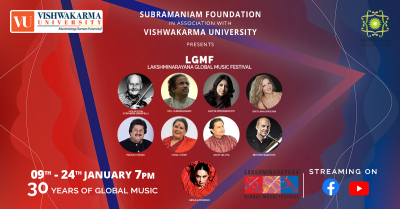
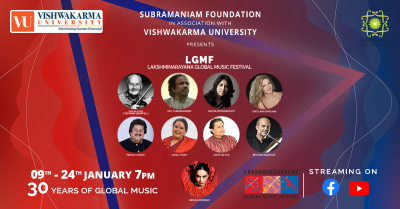
2021 has been the symbol of hope and finally, we can see a silver lining emerging. As a celebration of all the good things to come, Vishwakarma University, along with the Subramaniam Foundation is organising a rhapsodic kick off to 2021 - The Lakshminarayana Global Music Festival.
Every year the LGMF sees electric performances by iconic artists. This usually exclusive event is virtual this year and you’re all invited!
The festival is a 3 weekend one, running from Jan 10, Jan 16-17 and Jan 23. This year’s line up consists of an eclectic mix of Indian and global vocalists, instrumentalists and a Flamenco dancer too!
An Iconic launch to the fest (Sunday, January 10)
The festival starts with “Bhajan Samraat”, Anup Jalota and his mellifluous ghazals and bhajans.
Norwegian tuba virtuoso, Oystein Baadsvik, will take the stage next. Baadsvik has performed at iconic centres globally including Oslo Philharmonic Orchestra, Bergen Philharmonic, Warsaw Philharmonic Orchestra, the Taipei National Symphony Orchestra, Singapore Philharmonic and Melbourne Symphony Orchestra. In 2006, he made his New York recital debut at Carnegie Hall.
The Blockbuster Weekend (January 16-17)
The mid-point of LGMF will be highlighted by some of the most exciting acts. Ghazal maestro Pankaj Udhas and classical pianist Svetlana Smolina are slated to perform on Saturday, January 16. Also performing on Saturday is Rajery, who plays the valiha, a symbolic instrument of Madagascar. Though firmly grounded in Madagascar, Rajery's music draws influences from around the globe and can be identified with universally.
Sunday's star performer, Kavita Krishnamoorthy, needs absolutely no introduction! Dubbed as the "melody queen" and with multiple awards and recognitions, including the Padma Shri, under her belt, she has expanded her horizons by performing as a soloist with multiple orchestras around the world.
Halfway through the festival, the audience will see a change of pace as the music will give way to some dancing. Flamenco dancer Ursula Moreno will perform a flamenco and an exclusive interview premiere with the Late legendary French violinist, Ivry Gitlis.
We Saved the Best for Last (January 23)
Watch an exclusive interview with jazz icon Stephane Grappelli on January 23. The festival will end with a BANG as Usha Uthup performs on the final weekend. Queen of Indian pop and jazz, this diva with unstoppable energy is going to raise the roof.
LGMF 2021 is going to be a spectacle to behold! We can't wait for this musical extravaganza to begin.
Here's the link to register for the fest: http://bit.ly/38JL824
Festival Dates: January 10, 16, 17 and 23rd
Time: 7pm onwards
LGMF 2021 will be streaming live on the following platforms:
LGMF- https://www.facebook.com/globalmusicfestival
Dr. L Subramanian- https://www.facebook.com/drlsubramaniam
Kavita Krishnamurti Subramaniam- https://www.facebook.com/kavitaksub
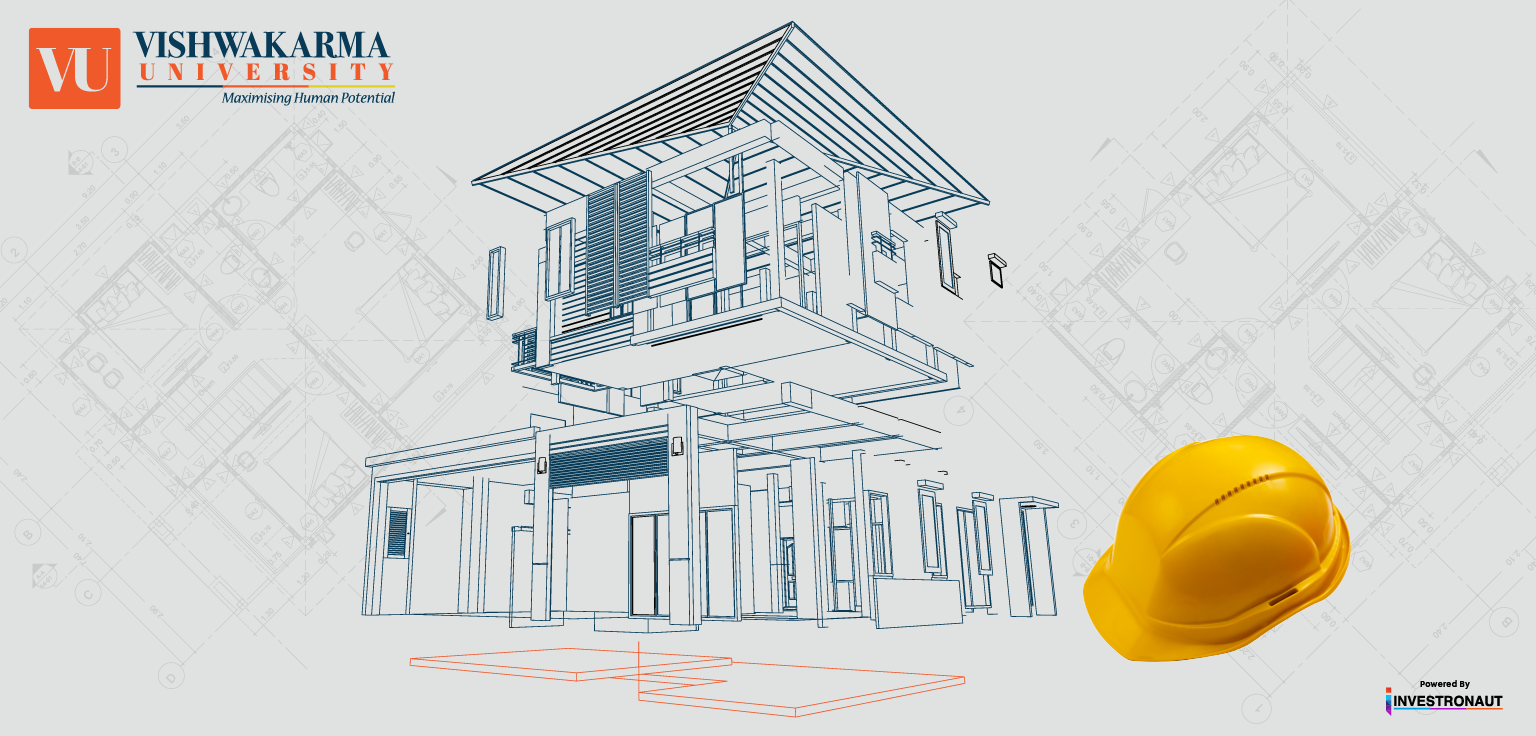
“Not many architects have the luxury to reject significant things.”
– Rem Koolhaas
There is an immense prospect to move ahead in your career in Architecture. The various nurtured skill- sets in this profession such as creativity, ingenuity, technical knowledge, financial knowledge, planning, maths, analytics, problem-solving, and attention to detail, to name a few, help, and open the horizon to various career options that one could explore.
The world of infrastructure has immense scope and requirements. It is multidimensional, such as designs, safety management, and material management, and others. Listed below are plans to consider after completing a bachelor’s in architecture.
Government Jobs: Government jobs are very lucrative as far as the exposure is concerned. There are multiple departments where an architect comes into play, like as the Public work department (PWD), Municipal corporations, Housing schemes, Town planning council, and the Archaeology department.
Building Construction projects: An Architect’s job is to envisage the building with an underlying structural design and MEP installations. It is an Architect’s responsibility to learn about the current law and regulations around safety, innovation, and laws that affect the design decision. An architect performs site visits and meetings.
Architectural Journalist: Architects and designers who want to pursue writing about architecture and design philosophy. He must possess advanced knowledge and reputable skill on the subject and should be able to interpret it through writing.
Landscape designer: Landscape Architecture includes urban planning, site planning, environmental planning, real estate planning, green infrastructure planning, and many more. It is an interface between the environment and culture. Like parks, campuses, cemeteries, commercial centers, resorts, transportation facilities, etc.
Industrial Architect: Designing buildings that facilitate the needs of the industry. An amalgamation of design and function. For example, power plants, refineries, warehouses, mills, etc.
The B Arch program at Vishwakarma University aims at creating professionals who will further power the growth of the industry by means of innovation and creativity. Find out more about the B Arch program B.Arch Course | College | Institute | Pune 2020-21 (vupune.ac.in)
Sources:
Basics of Architectural Journalism in Indian Context (worldarchitecture.org)
What Is Industrial Architecture? (thespruce.com)

The 30th edition of the Lakshminarayana Global Music Festival was a roaring success as elites from both the Indian and international music scene graced the fest with their performances.
The festival is celebrated every year by the Subramaniam Foundation, in association with Vishwakarma University, Pune to honour Prof. V Lakshminarayana. In a first time ever for LGMF, the concerts were virtual and streamed online for all to witness.
Dr. L Subramaniam's daughter herself hosted the event with much poise and panache. The festival is much looked forward to by the students of the School of music at the Vishwakarma University, Pune. The event is a crucial part of the curriculum for these students, who train under legendary mentors like Dr. L Subramaniam and Mrs. Kavita Krishnamurthy. More details about this course can be found here: https://www.vupune.ac.in/academics/b-a-music
For those who missed the fest, don't worry, we'll run you through some of the high points of the festival.
The Best of Indian and Norwegian Music
Anup Jalota, the much beloved voice for millions of Indians, opened the show with his famous "Rang de Chunariya". He also stressed on the importance of the knowledge of classical music, in a conversation with Dr. L Subramaniam. The audience was truly mesmerised to discover some unknown facts about the legend, like his first public performance which was at the tender age of 7.
The weekend ended with a charming duet by the tuba virtuoso from Norway, Oystein Baadsvik and his wife, Ana, on the piano. He wowed the viewers with one of his own beautiful compositions, aptly chosen, which translates to "It's gonna be alright". An entertaining interview followed this performance, where Baadsvik spoke about his experience with the mosquitoes, backwaters and the calmness he experienced in Kerala, India.
Exclusive premieres and Never-Before-Seen Footages
The true high point of the festival was when Kavita Krishnamurthy's new song "Chahaton" premiered for the first time on the fest. Picturesquely shot in Bali, the melodious composition was as soothing to the eyes as it was to the ears. The much-awaited Flamenco dance by Ursula Moreno followed the premier. She shone and sparkled with such effortless grace. The enchanting music and her intense emotions elevated the experience for the audience.
LGMF viewers were treated to a rare musical collaboration between the 2 great violinists, Dr. L Subramaniam and Stephane Grapelli. The culmination of this duet was a truly magical composition and the never-before-seen video was streamed for the first time on the LGMF platform. The final segment featured a conversation between the 2 violinists in an informal setting.
Up-Close & Personal with Usha Uthup and Pankaj Udhas, An introduction to Malagasy Music
On Sunday, ghazal maestro Pankaj Udhas was headlining the festival as we saw him perform with his ensemble of musicians, followed by a very personal conversation about his first break and his 9 year struggle before he rose to fame in the music industry. This marked the end of a fabulous week 2 of LGMF.
Week 3 was opened by Queen of Pop, Usha Uthup who performed a mellow English number in her crystal clear voice. As usual, she was a delight to behold!
The LGMF audiences were fortunate enough to be introduced to the Malagasy singer, Rajery and the unique instrument from his homeland, called the valiha. He explained the instrument for the benefit of the audience, before performing. His cheerful disposition along with the sweet sound of the valiha, were accompanied by glimpses of the wildlife and scenic natural beauty of Madagascar.
Other highlights of the final weekend included a candid conversation between Dr. L Subramaniam and Usha Uthup and the enchanting tunes of Tchaikovsky, performed by the classical pianist, Svetlana Smolina.
Until Next Year...
The bar was truly raised this year, with superlative performances, never-before-seen footage, epic collaborations and of course, global artists par excellence. We can't wait for the LGMF 2022, where we hope to see these electric performances live on stage! Until then, we shall carry the musical melodies of these past weekends in our hearts.


After the rigor of three or four years in college, the placement season is finally upon you. You have applied for your dream company and fortunately, were shortlisted. You have also survived the ruthless eliminations in the written test and the group discussion. Now it’s just the technical interview that separates you from your goal. At this stage, the help that you could get from your resume is over and it’s up to you how you drive your interview and whether you get selected for the job.
So here are a few tips on how to crack a technical interview.
Strengthen your Fundamentals
Once you walk in through that door, there would most definitely be tough situations which you would never have faced earlier in your life. In all such cases, your fundamentals will back you up and will definitely help you get close, if not solve the problem altogether.
It is important for you to get the basics right. If you falter with fundamentals, it is certainly going to leave a bad impression on the interviewer.
Know Thyself
Most technical interviews begin with a simple question, “Tell us about yourself”. Unfortunately, this particular simple question has no straightforward answer. It’s an opportunity to market yourself and focus on things which are not on your resume. Tell them how good a team player you are and how you drove your most recent project to completion with ease. Always ensure you have one or two real life examples to back you up.
It’s a good idea to be prepared for this question because you will have to face it invariably.
Remember that you can steer the interview process through this question but make sure that you don’t deviate from what is mentioned in the job description. For instance, you DO NOT want to talk about your interests in appearing for a management exam while interviewing for a technical position.
The Team Player
No matter how efficient you are as an individual, companies prefer team players over lone wolves. Try to emphasise on how well you will work in a team. If you can give an example of how well you did as a team in your recent projects or internships, it will definitely earn you extra points in the mind of the interviewer.
Think Aloud
When a technical question has been rolled out to you, chances are that you need to think and come up with a proper approach in order to solve it. If you are unable to solve it, and that’s the first thing that you speak, you would probably leave a bad impression! The trick here is to think aloud – mention what is going inside your head, so that the interviewer knows your thought process. Taking the correct approach is always more important than blatantly solving problems.
If you are asked to write a program, let the interviewers know how you plan to go about doing it. Try and explain your steps and why you are taking those! Being a fresher, no one will ask you to develop a big complex web site or difficult scenario , the interviewer will only ask some basics and concepts and nothing else. It is good to write some pseudocode before writing the actual program, but make sure you let the interviewers know. Always remember to test your code for bugs.
Be Honest, They’re Smart!
There might be a point in an interview where you could be asked about your role in a specific project. Although, you may be tempted to exaggerate your contribution, it’s generally advisable to stick to the reality. Always keep in mind that the panel has interviewed hundreds (if not thousands) of candidates and they will be able to guess if you were to tell something beyond your capabilities. Similarly, if you have seen a problem before, it’s recommended that you let the interviewer know.
It’s all about your attitude
No matter how well prepared you are, it’s perfectly normal to get stuck whilst answering a question. In such a situation, it’s important to show how hard you are trying. At the same time, keep your mind open for subtle hints which he/she may throw at you. Interviewers love it when you are able to connect the dots and come to the correct answer. Be confident in what you are saying. It’s a known tactic by interviewers to ask you if you are doubly sure of your answer.
Follow-up
Although in campus interviews, you are given the results almost immediately, it is not the same in the case of the off-campus interviews. Make sure you ask questions, ask about the team and its culture to leave the impression that you are actually interested in working for them.
Smile and look positive, even if you’ve messed it up!

Fashion & Apparel Design is one of the most coveted programs in the world, not only for all the glitter and glamour, but also for its versatility in the industry. There is a wide array of careers and industries that a fashion design graduate can choose to be a part of.
Let's take a look at some of them:
People are consuming digital content faster than ever and fashion blogging is a high industry that you can be a part of. Millennials and GenY are always looking to bloggers for fashion advice and style tips. So, if you're a fashion design graduate with a penchant for writing, this would be right up your alley! Starting a blog is super easy and with the right collaborations and platforms, it can earn you not only a lot of money, but also a considerable amount of fame.
How exciting would it be if you were paid to shop?!? A fashion buyer does EXACTLY what the term suggests! This role would require you to do a lot of research, predict trends before they're even a thing, and shop for fabrics, style and accessories that would appeal to your company's clients. This job requires a thorough knowledge of the industry and trends, an eye for detail and sound business and financial knowledge.
Every fashion house and brand needs to be marketed! And who better to do this than a fashion design graduate, who understands the finer details of the industry. Building a brand identity, strategising and brand communication, promoting the brand, predicting consumer behaviour and analysing trends... as a fashion marketer, all of these activities would fall under your purview. While it can be a demanding job, it is also much sought after.
Fashion designers are the visionaries that need to bring their visions to life. Fr this purpose, they need a fashion illustrator. An illustrator communicates the designer's ideas by means of sketches or illustrations. If you have excellent communication skills and love to create art through sketches and drawings, this may be the right career for you!
Whoever heard of great fashion without accessories? For every exquisite garment, an equally fabulous piece of jewellery is necessary. If apparel isn't your calling, you can pursue a career in jewellery design. This requires knowledge of precious stones, metals and of course, designing.
If you have been fascinated by the glitter of theatre and cinema, being a set designer will get you closer to the stars than ever. As a set designer, you will have to read the script of a motion picture, play or a television show and visualise the scene in which the action will take place. It is a highly creative profession and the set designer is responsible for not only setting the mood and atmosphere for the scene, but also for making it functional according to the requirements of the scene.
A course in fashion designing in no way restricts you to only designing clothes and accessories. You will find applications for this course in numerous industries that require creativity and knowledge of fashion.
Interested in studying fashion design? Vishwakarma University, Pune, offers an excellent BA program in fashion and apparel design. The curriculum for this 3 year program is based on a design sensitisation that balances global fashion aesthetics with an Indian soul.
You can find more details about the program here:


Interior designing is an emerging industry. The current scope of it is competitive and an early entry into the industry whether through work or study will remain an added advantage. However, we do believe that there still are many segments within interior designing services that remain unexplored, making it highly lucrative to look at in the near future. Universities and institutes are opening up to the idea of offering various interior designing courses and degrees. Once you have successfully completed the course from a renowned institute, there is immense scope for making a prodigious career in it. As a professional interior designer, your ability to prove your creativity with modern interior designs, knowledge, and experience will get you to work with some of the best firms in this field or even on your own.
Listing below top job opportunities for Interior Designers:
Teacher: To educate the students about interior designing. To educate the students about interior designing (practical and theory) with their knowledge and experience. This gives them first-hand access to the information required for moving ahead in the career.
Architectural Firms: Can represent being an in-house interior designer that will further in creating a functional and quality interior environment that includes furniture, fixtures, and other accessories to create a desired look and function for spaces inside the building.
Retail: Create interesting and innovative designs for visual displays basis their expert knowledge of how customers interact with spaces in a retail shopping environment, and how to translate a brand into a three-dimensional experience that helps clients sell products.
Construction Companies: Prepare and issue working drawings Approve samples of various elements and components. Visit the site of work and fabrication workshop, inspect and evaluate the progress of works.
Set Designing /Event Management: These are the professionals in the entertainment industry. They are responsible for creating, maintaining, and executing the ideas of the director by putting in their creativity and thoughts. Production designers are responsible for set designs that we see on our television screens or in films.
Exhibition Centers: As the name suggests an exhibition designer works on large projects and exhibitions on a commercial basis. The main aim of these designers is to convey the message of their brand clients to the audiences.
The Interior Design Program at Vishwakarma University focuses on providing a student-centred teaching and learning environment. The students are provided with a variety of experiences that build their design knowledge and skills. As a highly competitive program, portfolio reviews are conducted at various levels within the curriculum to determine a student's entrance and continuance. This program prepares students to enter the design profession with a strong work ethic and a comprehensive portfolio.
To know more about the program at Vishwakarma University click here https://bit.ly/3qw7RGD
Source: college dekho, how to become.org

Has studying abroad been a dream of yours that you couldn't quite get around to? Don't lose heart, because a lot of prestigious Indian universities now offer the opportunity to study at world-class universities for a few semesters. These student-exchange programs are a terrific way of getting the best of both the Indian and global education systems, at a quarter of the cost.
Vishwakarma University, Pune, has collaborated with Nanyang Technological University, Singapore to promote such bilateral ties and to provide a global learning experience to its students from VU and Vishwakarma Institutions (Vishwakarma Institute of Technology (VIT), Vishwakarma Institute of Information Technology (VIIT) & Vishwakarma Schools (Wisdom Schools).
Here's how a student exchange program can amplify your education experience and help you personally and professionally
Studying in foreign universities exposes you to different approaches to teaching, unique learning methodologies and alternative means of instruction. Right from the way professors interact with students to the way assessments are conducted, the whole study experience is distinctive. When you come back to your home country, you can share this knowledge with your peers and professors and help inculcate the best facets of international systems into your own way of learning.
Living and studying in a different country makes you aware of the cultural, ideological and political happenings around you. It exposes you to students from different countries, each with a unique point of view. This gives you a global outlook and it makes you understand and empathise with different cultures and nationalities. You become more tolerant and understanding towards international practices. You will come back a changed person, with a truly global stance.
Employers look favourably upon candidates with international exposure. Your stint at a study-abroad program will equip you with the ability to solve global challenges at the workplace and it can help you understand international markets better than a student without any international exposure. Your familiarity with a foreign language, ability to comprehend different accents and understanding of international cultural and industry practices will also make you an extremely competitive choice for employment.
A large part of undergraduate and postgraduate education is about building bonds that can help you personally and professionally. When you interact and mingle with students from different backgrounds, you strengthen your network which can help you when you're looking for employment or if you're looking to build a business of your own. After your return to your home country, you can continue to exchange ideas and knowledge, be it educational, professional or personal.
A student exchange program helps develop your self-confidence and self esteem. Living independently in a foreign country, venturing into the unknown, far from your comfort zone changes you as a person. You mature as an individual when you face challenges in a day-to-day context. You also develop deep friendships and a sense of independence that is truly liberating.
We currently live in revolutionary times where it is actually possible to study abroad, while being enrolled in an Indian university. It is a life-changing experience that you can not miss out on.
Vishwakarma University, Pune, offers internships for undergraduate, postgraduate and PhD students, who also have the fantastic opportunity to embark on collaborative research work with NTU, under the expert guidance and supervision of both faculty.
Students may be selected for internship stints of up to 2 months, or a semester-long student exchange programme. Depending on their academic performance, students from Vishwakarma Group’s institutions may also be admitted as full-time undergraduate and postgraduate students at NTU, Singapore. To know more about the eligibility and requirements of the program, visit our website https://www.vupune.ac.in.
Professional as well personal mentoring at VU guides and supports the students to gain social and academic confidence, develop communication, seek practical advice, identify goals and establish a sense of direction. Mentoring helps students to unlock their potential, promotes their academic success, and fuels their growth throughout their education journey.
Global exposure at an early age provides a World View to learning. In a constantly changing competitive world, it is imperative to know what works Globally. VU has considered this aspect while imparting education on campus. At VU, students are prepared to connect globally with a broad, balanced, and enriching teaching-learning process. VU’s collaborations with Foreign Universities, International Projects and Assignments, Global Internships and Centers of Excellence are certainly a LaunchPad to be Global.
At VU academic group of scholars and researchers supports the mission of contemporary transformative education and real-world experience. Faculty also includes professors and professionals with outstanding national/international education backgrounds, experiences, and orientations. These educators, by encouraging, engaging, and challenging, positively influence the lives of students.
At VU, the students pursue their academic goals in an environment designed to inspire, support, and empower them. Through rigorous teaching-learning, research, innovation, exposures, insights, and practice VU aims to prepare students for life and livelihood. VU strives for Academic Excellence by promoting Interdisciplinary Approach, Experiential & Blended Learning, Industry Projects, Concurrent Evaluation

NAVIGATION
QUICK LINKS
PROGRAMMES
CONTACT US
Only for Students
+91 9590300911Only for Faculties
+91 8669908316Copyright © Vishwakarma University, Pune 2026 All rights reserved..
[Best viewed in IE 10+, Firefox, Chrome, Safari, Opera.]
Powered by