Activity Title |
Awareness Rally based on NEP 2020 to mark launch of NEP 2020 |
Survey Dates |
Monday, 25th August 2025 – Friday, 29th August 2025 |
Mode |
On-campus, Vishwakarma University, Pune |
Curriculum Linkage |
NEP 2020 initiative taken by UGC |
Coordinator |
Abdul Hannan Dalal, Department of Artificial Intelligence (NEP SAARTHI), Vishwakarma University, Pune | Email: This email address is being protected from spambots. You need JavaScript enabled to view it. , This email address is being protected from spambots. You need JavaScript enabled to view it. Purab Ganguli – NEP SAARTHI Sanskriti Kopkar – NEP SAARTHI Anuj Jaiswal – NEP SAARTHI Sifat Patel – NEP SAARTHI Gargee Deshpande – NEP SAARTHI |
Convenor |
Dr. Madhvi Saxena, NEP Coordinator, Vishwakarma University, Pune |
Organizing Chairperson |
Prof. (Dr.) Kedar Sant, Registrar, Vishwakarma University, Pune |
Submitted to: |
UGC (University Grants Commission) |
The National Education Policy (NEP) 2020 marks a landmark reform in India’s educational landscape, fostering holistic, multidisciplinary, and skill-based learning. To commemorate its launch and strengthen awareness, Vishwakarma University, Pune, in collaboration with NEP SAARTHI, organized a five-day Awareness Rally from 25th–29th August 2025. Maximising Human Potential
The initiative aimed to actively involve students, faculty, and stakeholders in promoting NEP 2020 and positioning Vishwakarma University as a leader in implementing academic reforms.
The primary objectives of the Awareness Rally were:
|
Day |
Date |
Faculty Participation |
|
Day 1 |
Monday, 25th August 2025 |
Science & Technology |
|
Day 2 |
Tuesday, 26th August 2025 |
First Half: Science & Technology Second Half: Journalism & Mass Communication |
|
Day 3 |
Thursday, 28th August 2025 |
First Half: Science & Technology Second Half: Commerce & Management |
|
Day 4 |
Friday, 29th August 2025 |
First Half: Architecture & Design Second Half: Economics ABC ID Doubt Clearing Session (Venue: Building No. 1, Eventorium) |
• NEP SAARTHIs:6 student ambassadors (allotted by UGC) conducted the rally.
• Student Participation: 300+ students from all faculties of Vishwakarma University actively took part in the rally.
• Faculty Engagement: Active involvement from Science & Technology, Commerce & Management,
Journalism & Mass Communication, Architecture & Design, and Economics faculties.
• Enhanced Awareness: Students and faculty gained deeper insights into NEP 2020 reforms.
• Youth Empowerment: Students acted as ambassadors for NEP, leading creative awareness activities.
• Collaboration: Faculties worked together, fostering interdisciplinary engagement.
• Visibility: Positioned Vishwakarma University as a leader in NEP 2020 promotion and academic reforms.
The NEP 2020 Awareness Rally successfully bridged the gap between policy and practice by engaging students, faculty, and the community in a participatory manner. Conducted by six UGC-allotted NEP SAARTHIs, the event saw active participation from over 300 students, reinforcing the significance of student-led initiatives in educational reforms.By empowering youth to spread awareness, the rally strengthened Vishwakarma University’s role as a frontrunner in educational transformation, cultivating future leaders committed to innovation, inclusivity, and academic excellence.
Organizing Team
• Dr. Madhvi Saxena – Convenor
• Prof. (Dr.) Kedar Sant – Organizing Chairperson
• Abdul Hannan Dalal – NEP SAARTHI (Coordinator)
• Sifat Patel – NEP SAARTHI
• Purab Ganguli – NEP SAARTHI
• Gargee Deshpande – NEP SAARTHI
• Sanskriti Kopkar – NEP SAARTHI
• Anuj Jaiswal – NEP SAARTHI
Department of Artificial Intelligence (NEP SAARTHI), Vishwakarma University, Pune
Sifat Patel (NEP SAARTHI), Vishwakarma University, Pune
Purab Ganguli (NEP SAARTHI), Vishwakarma University, Pune
Gargee Deshpande (NEP SAARTHI), Vishwakarma University, Pune
Sanskriti Kopkar (NEP SAARTHI), Vishwakarma University, Pune
Anuj Jaiswal (NEP SAARTHI), Vishwakarma University, Pune
Email: This email address is being protected from spambots. You need JavaScript enabled to view it.
Dr. Madhvi Saxena, Department of Artificial Intelligence (NEP Coordinator), Vishwakarma University, Pune
The National Education Policy (NEP) 2020, launched on 29th July 2020 by the Government of India, marks a significant milestone in India's education system. After more than three decades since the last policy (NPE 1986, revised in 1992), NEP 2020 brings a forward-thinking, student-centric framework to align education with 21st-century needs. It aims to make learning more flexible, multidisciplinary, skill-oriented, and outcome-based. In light of its importance, a dedicated informative session was organized at VishwakarmaUniversity for the first-year students. The session was conducted by Dr. Madhvi Saxena and prepared by the NEP SAARTHIs team. It sought to provide students with a foundational understanding of the new policy framework, its components, and the practical implications it will have on their academic journey and career development.Maximising Human Potential
The primary objectives of this session are:
Session Overview and Key Takeaways
More than 70+ first-year students actively participated in the session. The session began with an overview of NEP 2020's vision to create a holistic, flexible, and learner-centered system that equips students with the skills and knowledge needed for a globalized world. The key differences between the earlier policy (NPE 1986/92) and NEP 2020 were discussed to highlight the policy’s progressive shift toward a modern education framework.
The Four-Year Undergraduate Programme (FYUP) was explained in detail, with its multiple exit options that offer certificates, diplomas, or bachelor’s degrees based on the number of years completed. This structure provides students the flexibility to pause and resume education while encouraging early internships and realworld exposure. Students were introduced to the Academic Bank of Credits (ABC ID) – a digital platform that records and transfers earned credits across institutions. They were guided on how to register and manage their academic credits via www.abc.gov.in, promoting academic mobility and continuity.
The session emphasized Multidisciplinary Learning, encouraging students to explore beyond traditional academic boundaries and choose from a wide range of skill-based and value-added electives, such as Artificial Intelligence, Music, Yoga, Data Science, etc., regardless of their core stream.With the shift to Outcome-Based Education (OBE), the focus is now on what students are expected to learn and achieve by the end of each course. Real-world applicability, competency development, and tracking of learning outcomes are integral parts of this framework.Maximising Human Potential
The Choice-Based Credit System (CBCS) and flexible credit accumulation were explained, highlighting how students can personalize their academic path through combinations of core, elective, and skill enhancement courses, with academic performance being reflected through a standardized GPA/CGPA format. In terms of Holistic Development, the session addressed the equal importance given to academics, co-curricular and extra-curricular activities. NEP 2020 encourages project-based learning, internships, social service, and evaluation of traits like ethics and discipline as part of the grading process.
The discussion also covered technology integration and inclusivity, emphasizing digital platforms forlearning, use of mother tongue/regional languages up to Grade 5, and support for students with disabilities(Divyang), including sign language and accessible learning environments.Further, the session outlined major institutional reforms, such as the formation of the Higher Education Commission of India (HECI), credit flexibility across UG, PG, and PhD levels, and a renewed focus on innovation, internationalization, and research.
Assessment reforms were introduced through the concept of continuous formative assessment, portfolio-based evaluation, and the establishment of PARAKH, a national regulatory body for standardizing learning outcomes and assessment quality. Student Engagement and Impact Measurement To assess the effectiveness of the session, an online Google Form quiz and feedback form were circulated to all attendees immediately after the session. The quiz was designed to reinforce the key concepts discussed and evaluate the participants’ understanding of the NEP 2020 framework. The feedback form captured insights on the session's clarity, engagement, and overall impact. A majority of the responses reflected a positive reception, with students appreciating the simplified explanation of a complex policy and expressing enthusiasm toward the freedom and flexibility NEP 2020 offers. Many students successfully attempted the quiz, demonstrating good retention and understanding of the session content.
The NEP 2020 informative session proved to be highly beneficial for first-year students in gaining clarity about India’s revamped education policy. It successfully demystified key reforms and empowered students to take control of their educational journey with a well-informed approach. The high level of participation andpositive feedback reaffirmed the session's effectiveness. Students were not only made aware of the NEP Maximising Human Potential structure and vision but were also encouraged to immediately begin engaging with tools like ABC ID, FYUP planning, and interdisciplinary exploration. Through such initiatives, Vishwakarma University continues to align its academic ecosystem with national education reforms and global standards.
engaging in experiential learning.
Abbreviations and Full Forms
|
Abbreviation |
Full Form |
|
NEP |
National Education Policy |
|
FYUP |
Four-Year Undergraduate Programme |
|
ABC ID |
Academic Bank of Credits Identification |
|
OBE |
Outcome-Based Education |
|
CBCS |
Choice-Based Credit System |
|
HECI |
Higher Education Commission of India |
|
PARAKH |
Performance Assessment, Review, and Analysis of Knowledge for Holistic Development |
Warm Regards,
Survey No. 2, 3, 4 Laxmi Nagar, Kondhwa Budruk,
Pune - 411048, Maharashtra, India.
Email: - This email address is being protected from spambots. You need JavaScript enabled to view it. | This email address is being protected from spambots. You need JavaScript enabled to view it.
Day/Date: Wednesday, 10th September 2025
Activity organised by: Ar. Nikita Mahajani under Virasat Heritage Club
Activity organised for: Open to all faculty and students
Number of participants: 35 students and 3 faculties
Map the SDG’s (if any):
SDG 4: Quality Education
SDG 11: Sustainable Cities and Communities
Brief description of the activity:
The School of Architecture and Planning, Vishwakarma University, organised an online guest lecture by Prof. Kurush Dalal, Archaeologist, Culinary Anthropologist and Museum Consultant, on the topic “Gadhegals – The Ass Curse Stone Tradition.” The session offered an engaging insight into the cultural, historical and social significance of these unique heritage stones. Prof. Dalal highlighted their role in community practices and heritage studies, encouraging students and faculty to explore unconventional aspects of Indian archaeology. The lecture concluded with an interactive discussion that broadened participants’ understanding of heritage and research.
Date & Day: Wednesday, 03rd September 2025
Time: 3:30 PM to 5:30 PM
Venue: Vishwakarma Vidyalaya, Bibwewadi, Pune
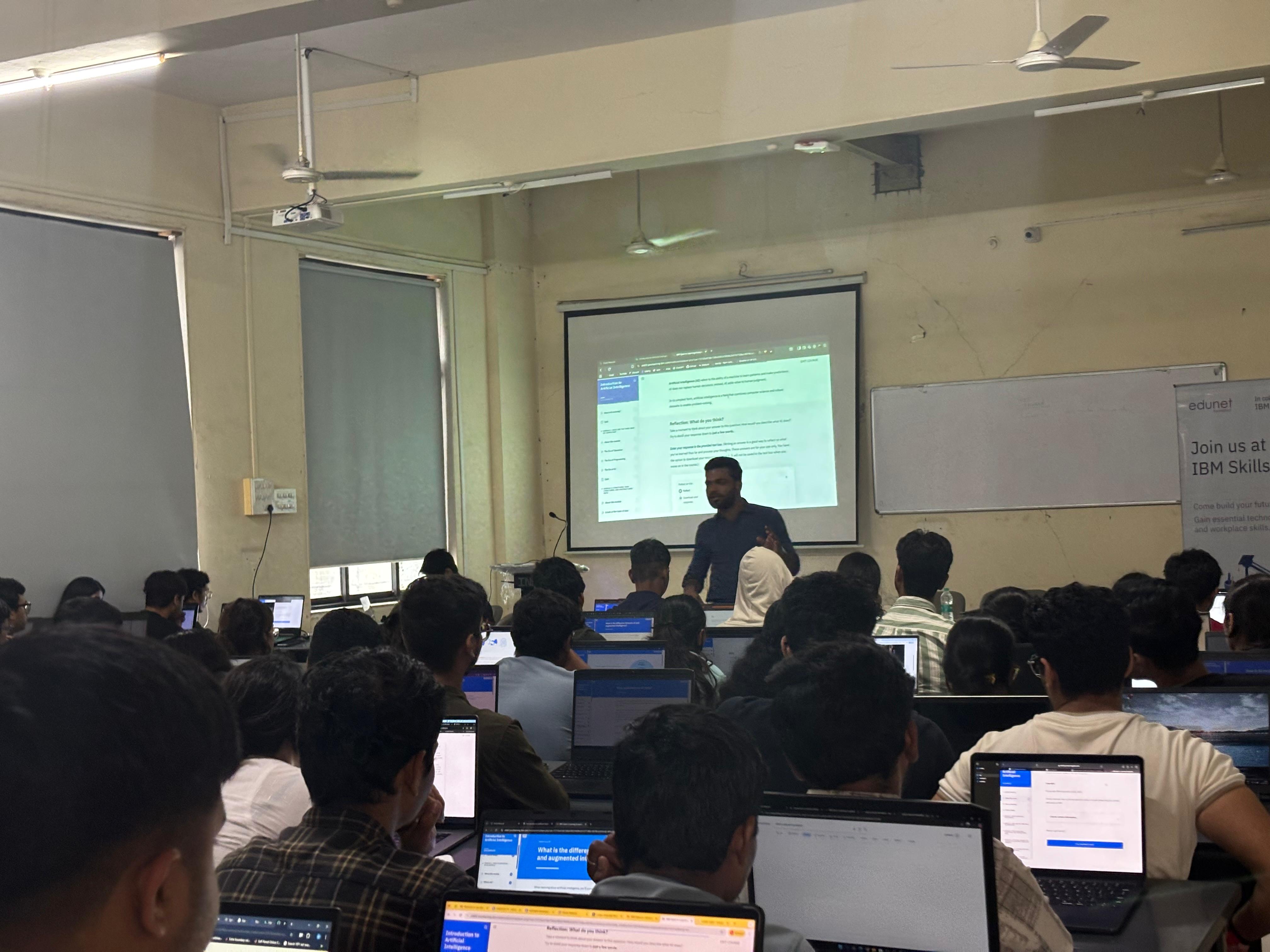
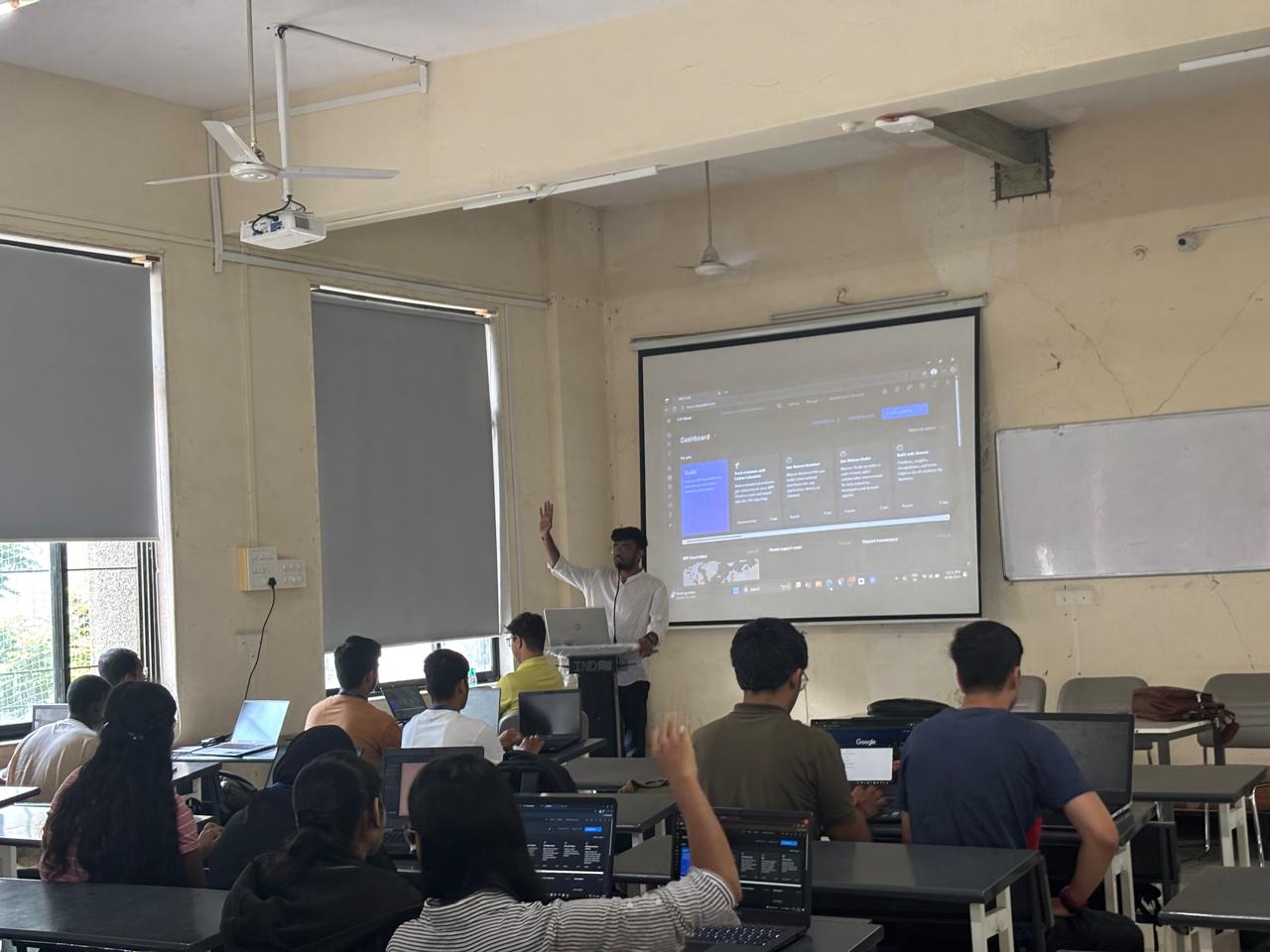
Organized by:Department of Artificial Intelligence, Faculty of Science & Technology, Vishwakarma University, Pune
Organizing Team
Organizing Chairperson: Prof. (Dr.) Yuvraj Lahoti
Convenors: Prof. (Dr.) Kailas Patil, Dr. Sandip Thite
Co-Convenor: Dr. Pavitha Nooji
Faculty Coordinators:
Objective of the Program
The session aimed to introduce students of Vishwakarma Vidyalaya to the world of Artificial Intelligence (AI), its applications in daily life, and the importance of AI tools in modern education and industry. The program also emphasized ethical considerations, safety aspects, and hands-on learning to make students comfortable with AI-powered technologies.
Event Schedule & Overview
Key Learnings & Highlights
Conclusion
The AI Tools Awareness & Training Session successfully introduced students to the rapidly growing field of Artificial Intelligence. By blending theory, real-life examples, demonstrations, and interactive learning, the event provided a strong foundation for young learners to explore AI responsibly and creatively. The Department of Artificial Intelligence at Vishwakarma University plans to conduct more such outreach programs to foster curiosity, innovation, and ethical awareness among students.
Title of the Activity:Ganpati Visarjan Camp
Date:6th September 2025
Venue:Ganpati Visarjan Camp, Kondhwa-Yewalewadi, Pune
Organized By:Pune Municipal Corporation (PMC)
The Faculty of Computer Engineering, Vishwakarma University, actively participated in the Ganpati Immersion Camp organized by the Pune Municipal Corporation on 6th September 2025. The professors from the department volunteered their time and efforts by engaging in shramdaan (voluntary physical contribution) during the immersion process.
This collective effort was aimed at supporting a cleaner, safer, and environmentally sustainable Ganesh festival. Faculty members worked in coordination with the PMC staff and local volunteers to ensure smooth conduct of the immersion process, while also spreading awareness about eco-friendly celebrations.
The participation of the Faculty of Computer Engineering, Vishwakarma University, in the Ganpati Immersion Camp was a successful community service initiative. The faculty’s involvement not only supported Pune Municipal Corporation’s efforts but also reinforced the university’s vision of contributing towards sustainable development and community engagement.
The School of Pharmacy, Vishwakarma University had the celebration of National Girl Child Day at Vishwakarma Vidyalaya, Bibewadi with the collaboration with Legal Aid Clinic for the 8th, 9th, and 11th (Science and Commerce) girl’s students. The celebration was coordinated by Prof. Dipali Talele and Prof. Yogita Shinde on 20th Februray 2024, aimed to provide the knowledge about the inequalities faced by a girl child in Indian society and rights of a girl child and addresses issues like child marriage, discrimination, and violence against girls in the form of skit. Later it was followed by the guidance session on menstruation health, good hygiene practices to be exercised and the importance of healthy lifestyle. All students were given the guidance of importance of laws which are necessary to know regarding the rights in the society. The session was followed by the health check up camp where weight, height, BMI was checked, and necessary advice was given to be physically fit. In this activity, total one hundred seventy-two students plus 10 faculties, health check was performed. The camp concluded with the distribution of pens and Frooti drinks. The 11th science girl’s students had the tour of School of Pharmacy which was guided by the Prof. Dipali Talele, Prof Yogita Shinde, Vandana Miss, Prof. Sonali Manwatkar, Prof. Poonam Taru. During the tour, they visited laboratories for Pharmacognosy and Pharmacology, as well as the machine room. The Dean had also addressed them regarding the importance of college education and maintaining good health.
The School of Pharmacy, Vishwakarma University, Pune, organized a Guest Lecture on “Scientific Writing and Medical Communication in the Domain of Health Economics” on 29th August 2025.
We were privileged to host Dr. Amit D. Kandhare, Principal Scientific Writer – Health Economics and Value Assessment, Sanofi Healthcare India, as the Resource Person. With his extensive expertise in scientific communication, health economics, and medical writing, Dr. Kandhare delivered an engaging and insightful session on the evolving role of scientific writing, evidence-based communication, and real-world applications in healthcare.
The lecture offered participants valuable guidance on best practices, publication ethics, and the significance of effective medical communication in health economics, enriching the academic discourse and inspiring young researchers.
The event was coordinated by Dr. Sabeena Syed, under the guidance and support of our Dean, Prof. Sunitha Sampathi.
The School of Pharmacy expresses its sincere gratitude to Dr. Kandhare for his enlightening session and valuable contribution to academic excellence.
The Induction Program for M. Pharm I Semester students was organized over two days to welcome the new batch and introduce them to the university, department, and support systems.
The program began with registration and a formal inauguration, graced by Hon. Vice President Prof. (Dr.) Wasudev Gade and Hon. Vice Chancellor Prof. (Dr.) Ashutosh Marathe, who motivated students on academic discipline, research, and holistic growth. Dean Prof. (Dr.) Sunitha Sampathi further inspired students to pursue their studies with sincerity and commitment.
Student-focused sessions followed, including an introduction to the institute and its faculties by Dr. Amrita Thakur, sensitization on anti-ragging measures by Dr. Om Bagade, ERP orientation by Dr. Madhav Shelke, and an overview of the Student Facilitation Centre by Prof. Jisha Joseph. Academic orientation covered subject-specific introductions—Pharmaceutics by Dr. Swati Mutha and Quality Assurance by Dr. Om Bagade—along with insights on institutional resources, PCI-based examination patterns (explained by Prof. Jyoti Sahu), and a faculty interaction session.
The program also featured interactive discussions, informal engagement, and a campus and departmental tour led by Prof. Jayesh Baldota. It concluded with a Vote of Thanks by Dr. Amrita Thakur.
Overall, the induction program successfully familiarized students with the academic environment, resources, and expectations, setting a positive foundation for their postgraduate journey.