
In fact, a study by The American College Health Association reported that 48.2% of college students struggle with time management, directly impacting their academic performance (ACHA, 2023). Students also often report academic stress, workload pressure, and time constraints as the top barriers to success (American College Health Association, 2023).
The good news? Time management is a skill; learnable, improvable, and life-changing. Whether you're a first-year trying to settle into college life or a senior handling complex projects, these 10 effective time management tips for college students will help you stay productive, organised, and stress-free.
Let’s dive in!
1. Use the 3-Box Rule: Study, Self, Social
A simple yet powerful time management strategy for university students.
Divide your day into three categories:
|
Study |
Self |
Social |
|
Classes, assignments, revision |
Exercise, rest, hobbies |
Friends, clubs, events |
This is one of the best time management tips for college students, especially first-years learning how to manage time as a college student for the first time. This prevents burnout and ensures balance between academics, wellbeing, and college life.
2. Follow the ‘1-Hour Everyday’ Rule
Instead of cramming the night before exams, invest one hour daily to revise class notes.

Research shows that short, spaced-out revision improves retention significantly as compared to cramming.
Recommended daily study duration for college students:
- 1-2 hours on regular days
- 3-4 hours during exam weeks
3. Build a Consistent, Realistic Study Routine
Research from the American Psychological Association shows that planning and structured routines significantly reduce student anxiety, especially during exams (American Psychological Association, 2022).
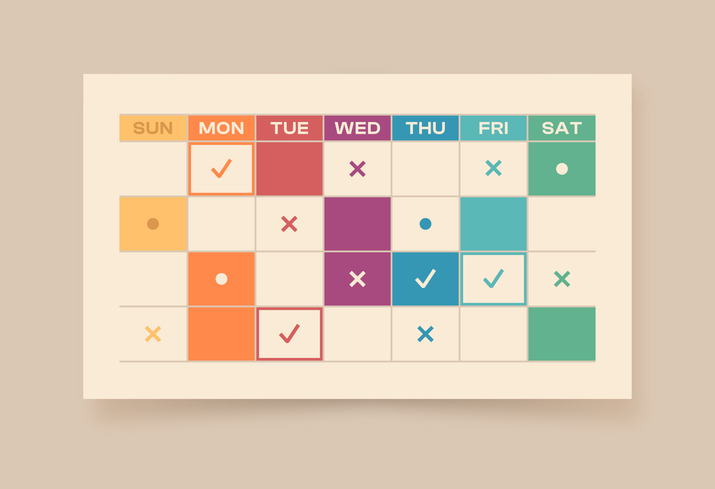
If you're unsure how to create a study schedule in college, start with a simple template and adjust it weekly based on classes and assignments.
A productive college routine doesn’t have to be complicated. Stick to:
- A fixed wake-up time
- A morning class review
- A 25-30 min deep-focus session
- A short recap at night
Sample Daily Routine for College Students:
|
Time |
Task |
|
7:00 AM |
Wake up, freshen up |
|
8:00 AM |
Quick revision of yesterday’s notes |
|
10:00 AM - 4:00 PM |
Classes + short breaks |
|
5:00 PM |
Assignment/reading |
|
7:00 PM |
Sports/hobby |
|
9:00 PM |
Light revision |
|
11:00 PM |
Sleep |
4. Use Time Blocking (Most Successful Students Do This)
Time blocking means assigning specific time ‘blocks’ to tasks: no multitasking, no chaos.
Example:
- 4:00-5:00 PM → Lab report
- 5:00-6:00 PM → Group project
- 7:00-7:30 PM → Revision
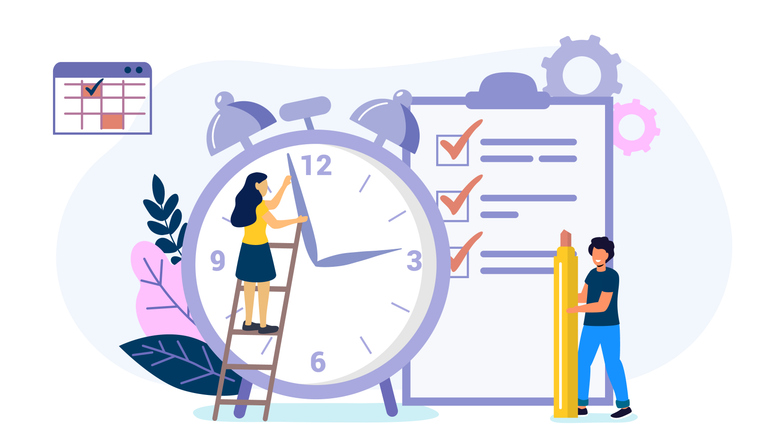
According to a study by Atlassian, students reduce distractions by up to 80% using time-blocking + no-phone blocks. Research shows that switching between tasks can reduce productivity by up to 40%, because the brain needs time to re-focus (Atlassian, 2021).
Apps to help:
5. Stop Procrastination with the 2-Minute Rule

If something takes less than 2 minutes, do it now:
Reply to an email, download lecture notes, add a reminder, fill a form.
For bigger tasks:
Start for just 2 minutes → your brain continues automatically.
6. Break Big Assignments Into Micro-Tasks
Instead of writing ‘Finish assignment’, into your to-do list, break it into:
- Read the question
- Research
- Outline
- Draft
- Edit
Why this works:
The Zeigarnik Effect states that the brain remembers unfinished tasks more, pushing you to complete them.
7. Plan Your Week Every Sunday
Weekly planning = less last-minute stress.
What to plan:
- Class timings
- Assignment deadlines
- Exam dates
- Internship tasks
- Social commitments
Students who express more adaptive attitudes about being organized and planning their time tend to earn higher grades compared to their peers (JSTOR, 2020) This also doubles as one of the most effective weekend planning tips for students, ensuring you finish college tasks on time.
8. Choose the Right Study Method For You (Not All Students Learn the Same)
Try these scientifically proven techniques:
|
Method |
Best For |
Why It Works |
|
Pomodoro (25/5) |
Focus & consistency |
Prevents burnout |
|
Active Recall |
Exams |
Boosts long-term memory |
|
Mind Maps |
Concept-based subjects |
Improves understanding |
|
Past Papers |
Competitive courses |
Real-world application |
9. Maintain a Study-Life Balance
College isn't just academics. You need time for fitness, hobbies, internships, and friends.

Top habits of productive students:
- Daily 20-min walk
- 7-8 hours sleep
- Minimum 1 tech-free hour
- Saying NO to unnecessary tasks
A good balance reduces stress levels by up to 40% (Macan, 1990).
10. Use the Right Tools to Stay Organised
Digital tools simplify student life.
Best Time Management Apps for Students:
|
Category |
Tools |
|
Note-taking |
Notion, Evernote, OneNote |
|
Task management |
Trello, Todoist |
|
Distraction blockers |
Forest, Freedom |
|
Time tracking |
Clockify, Toggl |
|
Revision & memory |
Anki, Quizlet |
Why Is Time Management Important for College Students?

- Helps balance academics, social life & self-care
- Reduces exam stress and last-minute panic
- Improves grades with less effort
- Builds habits useful for internships & jobs
- Makes students confident, independent, and organised
Research shows that students who manage time well perform better, feel healthier, and experience less stress throughout college. Good time management also strengthens study-life balance for UG and PG students, helping them balance academics and extracurriculars smoothly.
A Quick Comparison: Good vs Poor Time Management
|
Good Time Management |
Poor Time Management |
|
Low stress |
High stress |
|
Steady grades |
Last-minute cramming |
|
Balanced routine |
Burnout |
|
Better sleep |
Irregular lifestyle |
|
Stronger confidence |
Constant overwhelm |
Final Thoughts
Time management for college students isn’t about being ‘perfect’, it’s about progress. Even applying 3-4 of these strategies can transform your academic performance significantly, reduce stress, and give you more time for the things you love.
If you're a UG or PG student aspiring for academic success, colleges like Vishwakarma University, Pune emphasise holistic learning, productivity skills, and student wellbeing to help learners thrive in academics and beyond.
Remember,
Better habits → Better productivity → Better future.
Further Readings on Time Management & Student Success:
- Ahmady, S., et al. ‘Relation between stress, time management, and academic failure: A systematic review and meta-analysis.’ PMC (2021).
- Fu, Y., et al. ‘Unlocking academic success: the impact of time management on college students’ study engagement.’ BMC Psychology (2025).
- Barbayannis, G., et al. ‘Academic Stress and Mental Well-Being in College Students.’ Frontiers in Psychology (2022).
- Gallardo-Lolanes, Y., et al. ‘Time management and academic stress among university students.’ ERIC (2020).
- Kausar, F. N. ‘Impact of Time Management Skills on Students’ Stress Levels and Academic Success.’ Contemporary Journal (2025).
- ‘8 Time Management Tips for Students.’ Harvard Summer School blog (2024).
- ‘The benefits of time management skills for students.’ Nord Anglia Education (2024).
- ‘Complete Guide to Stress and Time Management for Students.’ UWS London blog (2025).